Anger and the Brain: How Neuroscience Powers Our Multidimensional Anger Test
Have you ever felt a surge of anger that seemed to come from nowhere, hijacking your thoughts and actions? It’s normal to feel overwhelmed, like a switch flips inside your mind. What if you could understand exactly what’s happening in your brain during those moments?
Anger is more than a fleeting emotion. It’s a complex biological process rooted in your brain’s structure—one you can learn to navigate. Let’s dive into the neuroscience behind anger—what flips your brain’s 'alarm switch,' and how understanding this can help you regain control. We'll connect this science back to your own experiences, showing how a tool like our free anger test can help you map out your unique emotional patterns.
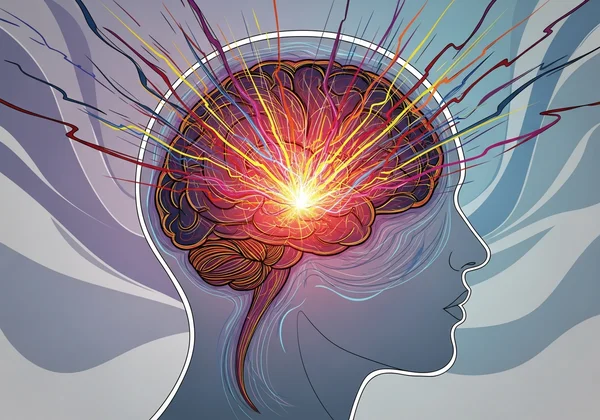
Understanding the Brain's Core Anger Pathways
At its core, anger is a survival mechanism. It’s an ancient alert system designed to protect us from threats. This system involves a rapid and intricate conversation between different parts of your brain. Let's meet the key players.
The Amygdala: Your Brain's Emotional Alarm System
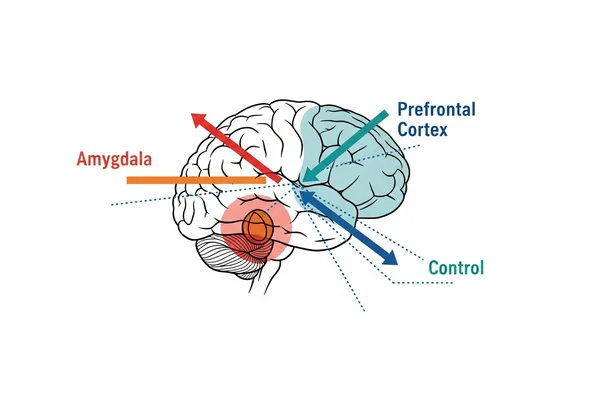
Deep within your brain are two small, almond-shaped structures called the amygdala. Think of the amygdala as your brain's hypersensitive smoke detector. Its job is to constantly scan for potential threats—physical, emotional, or social.
When the amygdala perceives a threat, like an insult or a sense of injustice, it sounds an alarm. It triggers an immediate, powerful, and often unconscious fight-or-flight response. This is why anger can feel so sudden and automatic; your emotional alarm system is designed for speed, not accuracy.
The Prefrontal Cortex: Your Inner Regulator of Impulse
If the amygdala is the alarm, the prefrontal cortex (PFC) is the command center. Located right behind your forehead, the PFC is responsible for rational thinking, problem-solving, and impulse control. It’s the part of your brain that can assess a situation and say, "Wait a minute, is this really a threat? How should I respond logically?"
In a calm state, the PFC keeps the amygdala in check. However, during an intense anger response, the amygdala can temporarily "hijack" the brain, weakening the PFC's influence. This is why it can be so difficult to think clearly or make rational decisions when you are furious.
The Brain Chemicals Fueling Anger (Adrenaline, Cortisol & Serotonin)
Your brain’s structures don’t work in isolation. They communicate using chemical messengers. When the amygdala sounds the alarm, it floods your system with stress hormones like adrenaline and cortisol.
- Adrenaline gives you a burst of energy, increasing your heart rate and blood pressure. It prepares your body for immediate action.
- Cortisol, the primary stress hormone, keeps you on high alert.
- Meanwhile, levels of serotonin, a neurotransmitter that helps regulate mood, can drop. Low serotonin is often linked to increased aggression and poor impulse control.
This chemical cocktail is the "fuel" that powers the physical sensations of anger—the racing heart, tense muscles, and flushed face.
Bridging Brain Activity to Your Anger Test Profile
So, how does this brain science relate to your real-life experiences with anger? The dynamic between your emotional alarm and your rational command center directly shapes your anger patterns. An anger assessment test helps translate these internal processes into understandable insights about your behavior.

How Brain Dominance Shapes Anger Intensity & Frequency
An overactive amygdala paired with a weaker prefrontal cortex often means more frequent, intense anger. Sound familiar? Someone with a highly sensitive "alarm" might find themselves getting irritated by small things that others brush off.
An anger test measures these dimensions. Your answers about anger frequency and strength describe the outcome of this neural tug-of-war. A high score in intensity could suggest a very powerful amygdala response.
Neural Correlates of Trigger Sensitivity & Impulse Control
What sets you off? These are your triggers, and they are closely linked to how your amygdala has been conditioned to perceive threats. Similarly, your ability to manage your reactions—to take a deep breath instead of yelling—is a direct reflection of your PFC's strength.
Our multidimensional anger test examines these specific areas. It helps identify patterns in your triggers and assesses your level of impulse control. By understanding whether your challenges lie more in sensitivity or in regulation, you can gain a clearer picture of where to focus your efforts.
The Impact of Past Experiences on Neural Anger Circuits
Your brain is not static; it changes based on your experiences. This is a concept known as neuroplasticity. If you grew up in an environment where angry outbursts were common, or if you've experienced significant stress or trauma, your brain may have developed stronger anger pathways.
This means the "anger circuit" can become a well-worn path, making it your brain's default response to stress. Awareness is the first step to carving new, calmer pathways. Understanding your current patterns through an objective tool like our test is essential before you can begin to change them. To get started, you can take the test on our website.
Empowering Your Brain for Calm: Practical Neuro-Strategies
The good news is that because of neuroplasticity, you can actively train your brain to respond differently. By practicing certain anger management techniques, you can strengthen your prefrontal cortex and soothe your amygdala. Here are a few evidence-based strategies.
Mindfulness: Rewiring Your Amygdala Response
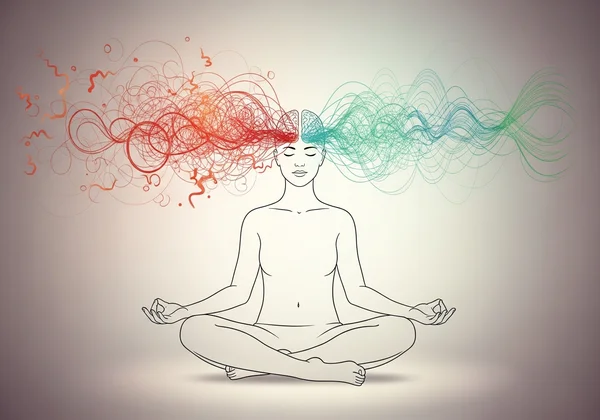
Mindfulness and meditation are like strength training for your attention. By practicing focusing on your breath or bodily sensations, you create a "pause" between a trigger and your reaction. This pause gives your prefrontal cortex a crucial moment to step in and assess the situation rationally. Studies show that regular mindfulness practice can reduce the amygdala's size and activity. Over time, this makes your emotional alarm less trigger-happy.
Cognitive Reframing: Activating Your Prefrontal Cortex
Cognitive reframing is the practice of consciously changing your thoughts about a situation to change your emotional response. For example, instead of thinking, "That driver cut me off on purpose!" you could reframe it as, "Maybe they are rushing to an emergency or just made a mistake."
This perspective shift engages your PFC. Instead of reacting emotionally, it prompts logical analysis. It's a powerful way to exercise and strengthen your brain's "command center," a key skill for managing different types of anger.
Physical Activity & Endorphins: Natural Anger Reducers
When you're angry, your body is flooded with stress hormones. Physical activity is one of the most effective ways to burn off excess adrenaline and cortisol. A brisk walk, a run, or a workout helps your body return to a state of balance.
Furthermore, exercise releases endorphins, which are your body's natural mood elevators and pain relievers. This provides an immediate calming effect and helps reset your emotional state. Knowing your anger profile can help you decide when a proactive workout might be the best strategy for your day.
Your Brain, Your Anger, Your Path to Insight
Understanding the science behind anger demystifies the emotion. It's not a character flaw; it's a biological process involving your brain's alarm system, its rational command center, and a flood of chemical messengers. The patterns of how you experience and express anger are a direct reflection of these complex inner workings.
Self-awareness is the first and most critical step toward managing your emotions effectively. By understanding your unique anger profile—your intensity, frequency, triggers, and control—you gain the power to make conscious choices.
Your brain’s anger triggers are unique. Discover yours with our free, scientifically-backed anger test for personalized insights and start your journey toward greater emotional understanding.
Frequently Asked Questions About Anger & Your Brain
Can a brain scan definitively diagnose anger issues?
No, a brain scan cannot diagnose "anger issues." While scans like fMRI can show which parts of the brain are active during an emotional state, they don't define a complex behavioral pattern. Anger is influenced by psychology, environment, and experience. Tools like an online anger test are designed for self-assessment, not medical diagnosis. For a diagnosis, always consult a healthcare professional.
What specific parts of the brain cause anger?
Anger isn't caused by a single part of the brain but by an interaction between several regions. The key players are the amygdala (the emotional alarm) and the prefrontal cortex (for rational control). The hypothalamus also helps regulate the release of stress hormones like adrenaline and cortisol.
How can I change my brain's angry reactions?
You can change your brain's reactions through consistent practice, thanks to neuroplasticity. Key strategies include mindfulness to calm your amygdala, cognitive reframing to strengthen your prefrontal cortex, and physical exercise to regulate stress hormones. The goal is to create new, calmer neural pathways so that anger is no longer the brain's default response to stress.
Are some people's brains naturally more prone to anger?
Research suggests that genetics and temperament can play a role. Some individuals may be born with a more reactive amygdala, making them more predisposed to strong emotional reactions like anger. However, this is not a life sentence. Experience and intentional practice can reshape these neural circuits over time, improving emotional regulation.