Anger-In, Anger-Out, and Anger Control in Daily Life
A self-assessment score can feel blunt when it lands all at once. Many people see a result and immediately ask whether their anger is “bad” or “normal.” A more useful follow-up is: “What do I usually do with anger once it shows up?”
That is where expression style matters. The free anger assessment is designed to support self-awareness across multiple dimensions, and expression style is one of the most practical ones to understand. It can help explain why two people with similar anger levels may handle conflict in very different ways.
Disclaimer: The information and assessments provided are for educational purposes only and should not replace professional medical advice, diagnosis, or treatment.

Why Expression Style Matters as Much as Anger Level
Anger is not only about how often it happens or how strong it feels. It is also about what happens next. Some people turn anger inward. Some push it outward quickly. Others are better able to slow down and regulate what happens before it spreads.
That difference matters in everyday life. It can shape arguments, recovery time after conflict, physical tension, and whether other people even realize anger is present.
A self-assessment result cannot diagnose a disorder or define a person's character. It can, however, point toward a pattern that is worth noticing more clearly.
What Anger-In, Anger-Out, and Anger Control Are Measuring
These three terms describe different ways anger may be expressed, contained, or managed. They are not moral labels. They are pattern labels.
Anger-in is not the same as having no anger
A 1998 PubMed study on the State-Trait Anger Expression Inventory identified factors that matched Anger-In, Anger-Out, and Anger-Control closely. That matters because it shows these patterns are not random everyday phrases. They come from a structured anger-expression framework.
Anger-in usually points to anger that is held inside, suppressed, or turned inward instead of expressed openly. In daily life, that may look like saying very little during conflict, replaying arguments privately, feeling physically tense, or insisting “I'm fine” while still carrying the anger hours later.
This does not mean the anger is mild. It means the anger is not being shown clearly on the outside.
Anger-out and anger control describe different patterns, not moral categories
A 2008 PubMed paper describes anger expression/out as verbal or physical aggressive behavior directed toward people or objects. It describes anger expression/in as suppression and anger control as attempts to prevent outward expression or calm angry feelings. These are different patterns, not simple opposites of “good” and “bad.”
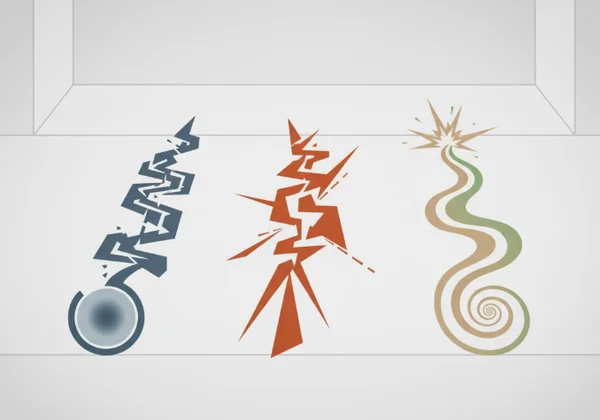
Anger-out may look like snapping, shouting, blaming, slamming a door, or using a sharp tone before there is time to pause. Anger control looks different. It is the effort to notice the anger, slow the reaction, and choose how to respond before the feeling takes over the whole interaction.
High anger control does not mean never feeling angry. It means the person is more able to manage how anger is expressed once it appears.
How These Styles Can Show Up in Daily Situations
A score pattern becomes more useful when it is connected to real situations. The goal is not to diagnose yourself from a few examples. The goal is to notice which pattern feels most familiar in ordinary life.
Conflict, bottling up, and sharp reactions can look very different
In one person, anger may show up as silence, withdrawal, and a long tail of resentment. In another, it may show up as fast escalation, harsh words, or visible frustration that burns hot and then fades. In a third person, the early signs may still appear, but the reaction is more likely to pause before becoming a blow-up.
A 2016 PMC study found that high anger-in predicted greater daily anger frequency and severity in patients with chronic disease. That does not mean bottled-up anger always leads to worse outcomes in every person. It does suggest that expression style can change how anger is carried through the day, not just how it appears in one moment.
This is one reason expression style matters. A person who rarely erupts outward may still be having a very difficult anger pattern internally.
A higher score in one style does not explain a whole person
No single style explains personality, background, trauma history, work stress, relationship habits, or current life pressure. A higher score in anger-in or anger-out is one piece of information, not a full explanation.
That is why a self-assessment result should be read with caution and context. Maybe anger-out appears mainly in one relationship. Maybe anger-in shows up after authority conflict but not at home. Maybe anger control is stronger at work than in family life. These differences matter.
The safest reading is also the most useful one: the pattern may be real, but it is not the same as a formal diagnosis.
What to Do After Seeing This Pattern in Your Results
The next step is usually not to judge yourself. It is to notice what the pattern helps explain and what support, if any, might help you respond differently.

Notice patterns before reaching for labels
Start with recent situations. What happened right before the anger? Did the reaction come out fast, stay hidden, or get managed before it spilled over? How long did the feeling stay active afterward?
The online anger test becomes more useful when a result is paired with a few real examples. A pattern on paper is easier to understand when it is connected to arguments, tension at work, family conflict, or the private aftereffects of holding anger in.
Brief notes can help here. You do not need a full journal. A few short observations about triggers, reactions, and recovery time can make the pattern clearer over a week or two.
Use the result as a conversation starter when needed
If anger patterns are causing repeated conflict, fear, damaged relationships, work problems, or distress that feels hard to manage alone, talk to a mental health professional or seek professional help. A self-assessment result can be a useful starting point for that conversation, especially when paired with examples.
Professional support matters even more if anger is leading to aggressive behavior, thoughts of harming yourself or someone else, or a level of tension that feels unsafe. If the situation feels severe or immediate, seek urgent professional help or emergency support right away.
The anger self-assessment tool is most helpful when it is used the way the site intends: as an informational starting point that encourages awareness and support, not as a final verdict.
Next Steps After Understanding Your Anger Style
Expression style can change how anger moves through daily life. It can be hidden, immediate, or more actively managed. Understanding that pattern does not excuse harmful behavior, but it can make the next step clearer.
That clarity matters because anger problems are not only about volume. They are also about direction, recovery, and what happens to the feeling after it arrives.
When a result is used with honesty, context, and support, it can become a more useful guide for change instead of a label to fear.