Angry People: Psychology, Triggers, and How to Respond Calmly
Angry people are often described as difficult, intense, or impossible to talk to, but anger is not a personality type by itself. It is a normal emotion that can become louder when a person feels threatened, disrespected, trapped, ashamed, overloaded, or unheard. Understanding the psychology behind angry people can help you respond with more steadiness, and it can also help you notice your own patterns if you are asking, "Why am I always angry and irritated for no reason?" For a private starting point, a free anger self-assessment can help organize anger frequency, intensity, triggers, and expression style without turning one rough moment into a label.
What Does "Angry People" Mean in Everyday Psychology?
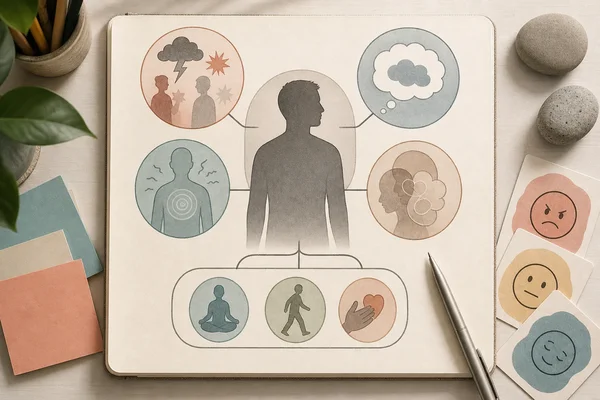
In everyday language, "angry people" usually means people who seem quick to react, easy to irritate, hard to calm, or often upset with others. The phrase can describe a repeated pattern, but it can also be unfairly broad. A person may look angry when they are anxious, grieving, exhausted, embarrassed, overstimulated, in pain, or trying to protect themselves from feeling powerless.
A person who gets angry easily is often called short-tempered, quick-tempered, hot-tempered, irritable, or reactive. Those words describe behavior, not a whole identity. They do not explain why the anger happens, how often it appears, whether the person regrets it afterward, or whether the reaction is linked to stress, sleep, trauma, substance use, relationship conflict, health issues, or learned family patterns.
Psychologically, anger often has a message underneath it. It may signal, "Something feels unfair," "My boundary was crossed," "I feel unsafe," "I am ashamed," or "I do not know how to ask for what I need." The message may be useful, but the expression can still be harmful if it becomes yelling, insults, threats, intimidation, or repeated blame.
Why Are Some People Angry So Often?
People become angry for many reasons, and the same outward reaction can come from different inner experiences. Some angry people are reacting to obvious triggers: criticism, disrespect, rejection, traffic, noise, financial stress, family conflict, or feeling controlled. Others seem angry "for no reason" because the trigger is hidden or cumulative. A small comment may land on top of poor sleep, hunger, chronic stress, old resentment, or a day full of tiny frustrations.
Anger also becomes easier to repeat when it has worked before. If yelling helped someone get attention, stop a conversation, avoid vulnerability, or regain control, the brain may treat anger as a fast strategy. That does not make it healthy or fair, but it helps explain why some people go there quickly.
There is also a mood connection. Some people ask why they are always angry and sad because anger can sit on top of hurt, disappointment, loneliness, or helplessness. Sadness may feel exposed, while anger can feel more powerful. For others, irritability is linked to anxiety, burnout, depression, hormonal shifts, chronic pain, or alcohol and drug use. The goal is not to guess one cause. The goal is to notice the pattern carefully enough to choose a better next step.
How Do We Get Angry Biologically?
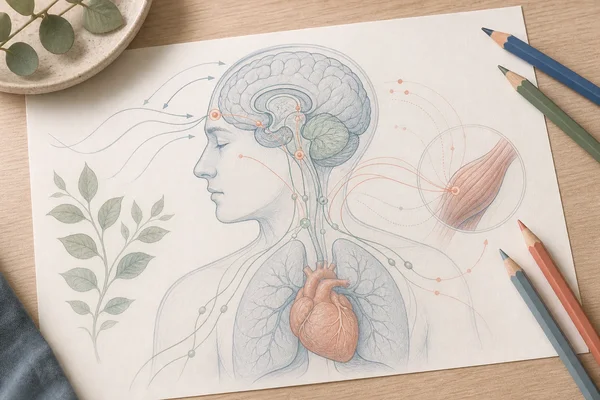
Biologically, anger begins when the brain interprets something as a threat, injustice, obstacle, or violation. The body then prepares for action. Stress hormones and nervous system arousal can increase heart rate, tighten muscles, sharpen attention, raise body temperature, and make speech faster or harsher. This is why angry people may clench their jaw, pace, point, interrupt, or speak more loudly before they have fully chosen what to do.
The brain regions involved in threat detection and emotion can react faster than the slower systems used for reflection, planning, and perspective. When arousal is high, it becomes harder to pause, consider nuance, or hear another person's intent accurately. That is one reason people may get so angry over little things: the visible trigger may be small, but the body is already primed.
This body-first view matters because it gives you more levers than willpower alone. Breathing, taking a short break, unclenching the body, lowering volume, stepping away from the audience, and naming the specific issue can all help shift the nervous system toward regulation. These steps do not excuse hurtful behavior, but they can make a different response more possible.
How to Deal With Angry People Without Escalating
Dealing with angry people starts with safety and steadiness, not with winning the argument. If someone is threatening harm, blocking your exit, driving dangerously, or becoming physically intimidating, prioritize distance and outside help. If the situation is tense but not immediately dangerous, the first goal is to lower intensity enough for a real conversation. A structured anger self-awareness tool can be useful later, but in the moment, your tone and boundaries matter most.
Use a calm, low voice and short sentences. Long explanations often sound like debate when someone is already activated. Try: "I want to understand, but I cannot do that while we are yelling." Or: "I can talk about this after a ten-minute break." This combines respect with a limit.
Name the concern without labeling the person. "You are always angry" usually escalates shame and defensiveness. "The volume is getting high, and I need us to slow down" is more specific. If you can, reflect the feeling without agreeing to unfair claims: "It sounds like you felt dismissed in that meeting." Reflection can reduce the need to repeat the anger louder.
Keep your own body language neutral. Step back slightly, keep your hands visible, avoid sarcasm, and do not crowd the person. If the angry person is a loved one, resist the urge to become their only regulator. You can be compassionate and still say, "I am willing to continue when we can both speak respectfully."
After the moment passes, focus on patterns. What sets off the reaction? How intense does it get? How long does it last? What repairs happen afterward? If the person is open to it, discuss one practical plan before the next conflict: a pause phrase, a time-out rule, a no-insults agreement, or a shared signal that the conversation needs a reset.

When Anger Might Point to a Larger Pattern
Most anger is not a mental health emergency. It is part of being human. But anger deserves more support when it is frequent, explosive, frightening, unsafe, or followed by guilt, damaged relationships, lost work opportunities, or self-harm urges. It also deserves attention when the person feels unable to stop once the reaction begins.
Some people search for intermittent explosive disorder treatment after repeated aggressive outbursts. Others wonder whether anger is connected to ADHD, bipolar disorder, autism, dementia, trauma, depression, anxiety, or a personality disorder. Anger can appear in many contexts, and online lists cannot sort that out reliably. A qualified mental health professional, primary care clinician, or crisis service can help when anger is intense, recurring, confusing, or linked to safety concerns.
The key is to avoid turning anger into a single explanation. Borderline personality disorder is often associated with intense anger in clinical descriptions, but anger alone does not tell you whether a person has that condition. Narcissistic, antisocial, paranoid, traumatic, mood-related, substance-related, and stress-related patterns can also involve anger. So can ordinary overload. Context, duration, function, and impairment matter.
A Private Way to Reflect on Angry People and Your Own Reactions
Whether you are dealing with angry people around you or noticing anger in yourself, the most useful question is pattern-based: what happens before, during, and after the anger? Track frequency, intensity, triggers, body sensations, thoughts, words, repair attempts, and consequences. A one-week log can show whether anger is mostly tied to sleep, hunger, criticism, alcohol, relationship topics, work pressure, noise, feeling ignored, or specific boundaries.
You can also use a private anger reflection tool as a gentle way to organize those observations. Keep the expectation modest: a self-assessment can support self-awareness, but it cannot replace professional care, emergency support, or a full clinical evaluation when those are needed.
The healthiest shift is from "angry people are impossible" to "anger has patterns I can notice, respond to, and set limits around." That shift protects compassion without sacrificing boundaries. It also gives anger a more useful job: not to control the room, but to point toward the need for clarity, repair, support, or change.

FAQ
What is the psychology of angry people?
The psychology of angry people usually involves a mix of perceived threat, blocked goals, unfairness, shame, stress, learned behavior, and emotion regulation difficulty. Anger can protect boundaries, but it can also become harmful when it turns into intimidation, insults, repeated blame, or unsafe behavior.
What do you call a person who gets angry easily?
Common everyday terms include short-tempered, quick-tempered, hot-tempered, irritable, reactive, or easily frustrated. These words describe a pattern of response. They should not be used as permanent labels, because anger can be shaped by stress, sleep, health, trauma, relationships, substances, and learned habits.
Why do I get so angry over little things?
Small triggers can feel huge when your nervous system is already loaded. Poor sleep, hunger, chronic stress, resentment, feeling ignored, pain, alcohol, anxiety, sadness, or previous conflict can prime the body for anger before the visible trigger happens. Tracking the full chain often reveals more than the final event.
How do you deal with an angry person?
Start with safety. If there is danger, leave or get help. If the situation is tense but manageable, lower your voice, use short sentences, avoid insults, name the specific behavior, and set a clear limit. You might say, "I want to talk, but I need us to lower the volume first."
What personality disorder is associated with anger?
Intense anger is commonly discussed in relation to borderline personality disorder, but anger alone cannot identify a personality disorder. Anger can also appear with trauma, mood disorders, anxiety, substance use, dementia, chronic stress, pain, or ordinary overload. If anger is severe, recurring, or unsafe, a qualified professional can help clarify what is happening.
Why am I always angry and sad?
Anger and sadness often overlap. Anger may cover hurt, grief, disappointment, shame, loneliness, or helplessness because it feels more active than sadness. If the mix lasts, affects daily functioning, or includes thoughts of harm, it is wise to reach out to a trusted person, clinician, counselor, crisis line, or local emergency service depending on urgency.