Anxiety and Anger: Why They Happen Together and How to Respond
Anxiety and anger can feel like opposite reactions: one pulls inward with worry, while the other pushes outward with heat, frustration, or sharp words. In real life, they often travel together. A person may look angry when they are actually overwhelmed, tense, embarrassed, scared, or exhausted from constant worry. Understanding anxiety and anger as connected stress responses can make the pattern feel less mysterious and more manageable. If you want a private way to reflect on how often anger appears, how intense it feels, and what tends to trigger it, a private anger self-assessment can be a useful starting point. It is not a clinical evaluation, but it can help you organize what you notice.
Why Anxiety Can Turn Into Anger
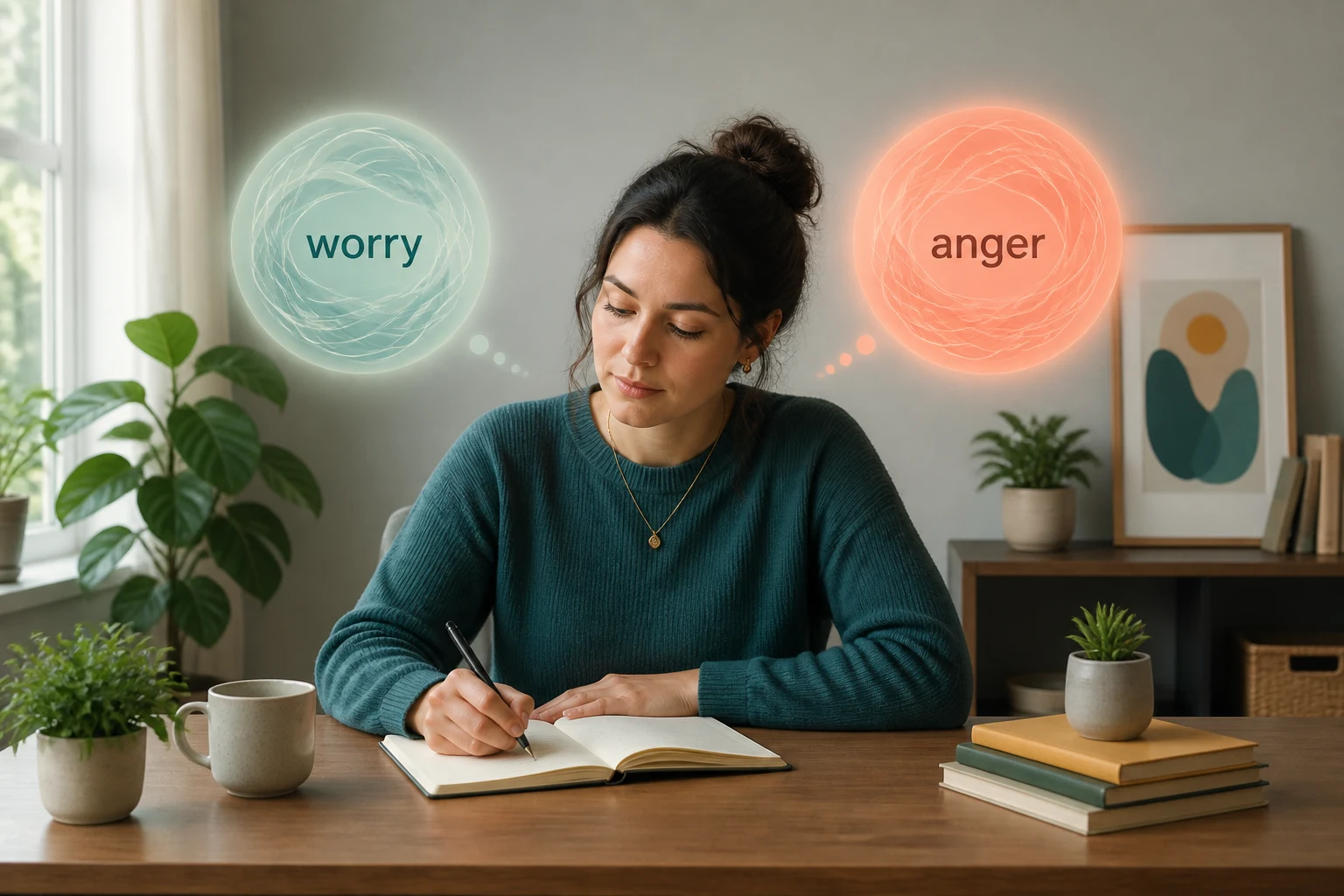
Anxiety is a threat response. It prepares the body to scan, avoid, freeze, or protect itself from something that feels uncertain or unsafe. Anger is also a threat response, but it often moves toward action: defend, correct, confront, or regain control. When anxiety keeps the nervous system on high alert, even a small obstacle can feel like one more threat.
That is why anxiety and anger issues can show up as snapping at a partner, feeling irritated by noise, becoming impatient with children, or reacting strongly to a small mistake at work. The anger may not be random. It may be the visible part of a longer chain: worry, tension, helplessness, overload, then a sudden push of anger.
Many people also feel shame after an angry reaction, which can restart the anxiety loop. They replay what happened, worry about the relationship damage, and become more tense before the next stressful moment. The goal is not to label yourself as an angry person. The goal is to notice the sequence early enough to choose a different response.
Shared Signs: Stress, Irritability, and Body Tension
Anxiety and anger share many physical signs because both can activate the body's stress system. You may notice a faster heart rate, shallow breathing, clenched muscles, heat in the face, stomach discomfort, a tight jaw, or trouble sleeping. Emotionally, anxiety may feel like dread, urgency, racing thoughts, or avoidance. Anger may feel like irritation, resentment, impatience, or a sudden need to argue.
The overlap can make the experience confusing. A person may say, "I am angry at everything," when the deeper problem is that their body has been running in threat mode all day. Another person may call it anxiety, but their family mostly sees the anger. Both descriptions can be true.
Try asking two quick questions when the feeling spikes:
- What am I afraid might happen?
- What boundary, need, or expectation feels blocked right now?
The first question often reveals anxiety. The second often reveals anger. Together, they give you a fuller picture than either emotion alone.
Map the Pattern Before You Try to Fix It
Because anxiety and anger are fast, it helps to slow the pattern down after the moment has passed. AngerTest.org's framework is useful here because it looks at anger across several dimensions: frequency, intensity, triggers, and expression style. A person who feels anger every day but keeps it hidden may need a different plan from someone who rarely gets angry but has intense outbursts during conflict. If you want to sort those dimensions without turning it into a judgment, an anger pattern check can help you name what is happening.
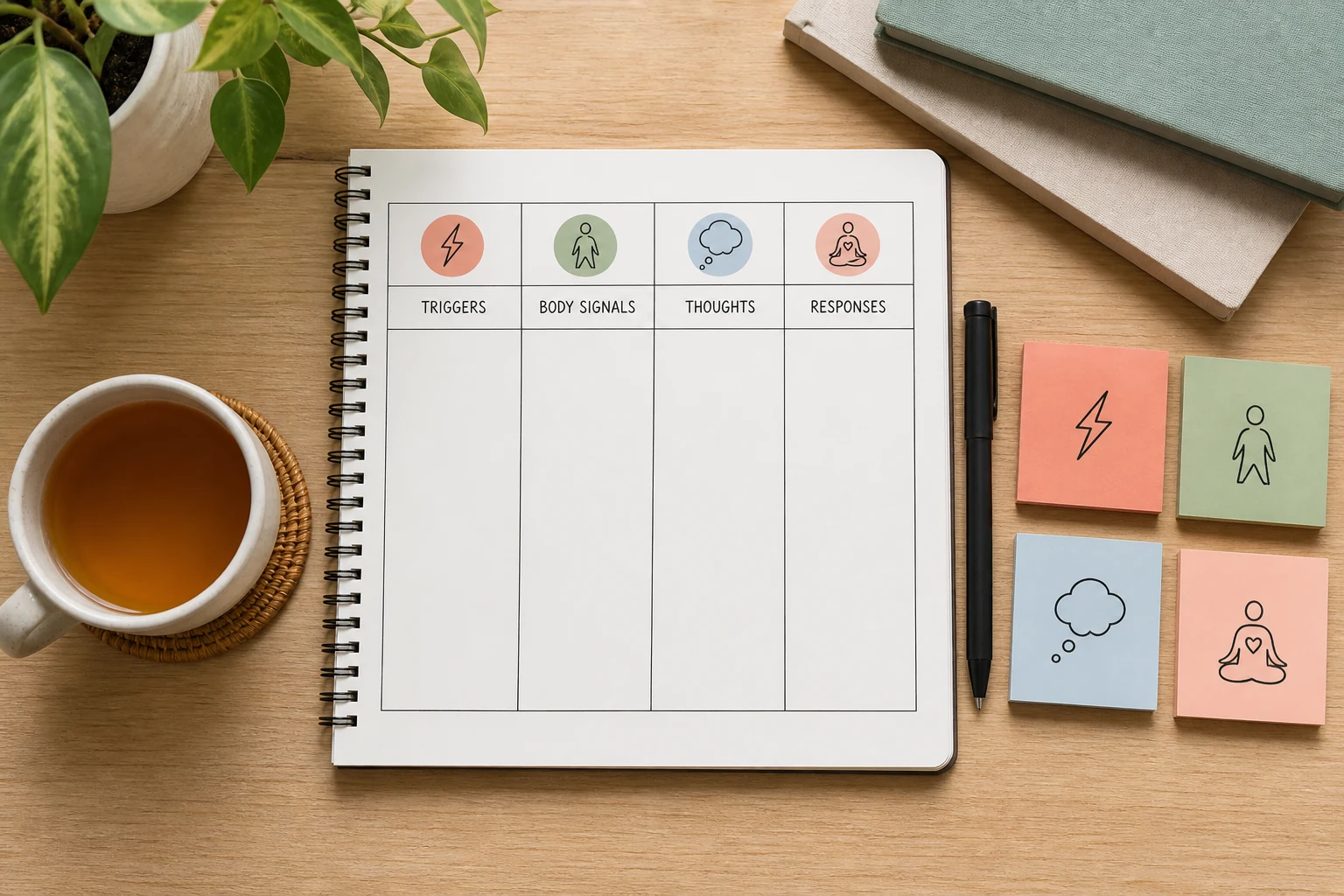
Use a simple four-part note for one week:
- Trigger: What happened right before the anxiety and anger rose?
- Body signal: What did you feel in your chest, jaw, hands, stomach, or breathing?
- Thought: What sentence was running through your mind?
- Response: Did you withdraw, argue, criticize, shut down, overexplain, or try to control the situation?
After a few entries, look for themes. Relationship anxiety may show up as anger when you feel ignored, criticized, abandoned, or misunderstood. Work anxiety may show up as anger when deadlines, mistakes, or unclear expectations make you feel trapped. Childhood anxiety and anger patterns may appear when a child lacks the words or skills to describe fear, shame, sensory overload, or disappointment.
Anxiety and Anger in Relationships
Anxiety and anger in relationships often appear when one person feels unsafe, unheard, or unsure where they stand. The anxious part may ask, "Are they upset with me?" The angry part may say, "Why do they never listen?" Underneath the reaction, there is often a wish for reassurance, fairness, respect, or predictability.
A helpful shift is to translate accusation into need. Instead of "You never care," try "I am getting overwhelmed and I need a pause before we keep talking." Instead of "Stop bothering me," try "I need ten minutes of quiet so I can respond without snapping." This does not mean anger is wrong. It means anger becomes more useful when it points toward a clear need instead of attacking the other person.
If both people are willing, make a short conflict agreement when everyone is calm:
- Either person can call a 20-minute pause.
- No one follows the other person from room to room during the pause.
- The conversation resumes with one specific issue, not a list of every past mistake.
- Each person names one fear and one request.
This kind of agreement matters because anxiety often wants immediate reassurance, while anger often wants immediate release. A pause gives both systems time to settle.
Anxiety and Anger in Men, Children, and Daily Life
Anxiety and anger in men can be missed because some men learn early that worry, fear, or sadness are not acceptable to show. Anger may feel more socially allowed, even when the original emotion is anxiety. This does not mean men are naturally angrier. It means emotional training, culture, stress, and expectations can shape which emotion gets expressed.
In children, anxiety and anger can look like defiance, meltdowns, avoidance, arguing, or sudden tears. A child may not have the language to say, "I am worried about school," "I feel embarrassed," or "The noise is too much." Adults can help by naming possibilities without forcing an answer: "Your body looks really tense. I wonder if this feels scary, frustrating, or too much right now."
Online discussions, including anxiety and anger Reddit threads, often show the same theme: people are relieved to learn they are not the only ones who feel both emotions at once. Peer stories can feel validating, but they cannot replace personalized care when anger becomes unsafe, frequent, or disruptive.
How to Calm Anxiety and Anger in the Moment
When anxiety and anger are already rising, long explanations usually do not work. The nervous system needs a practical interruption. Start with the body, then move to words.
Try this 90-second reset:
- Step away if you can do so safely.
- Unclench your jaw and drop your shoulders.
- Exhale longer than you inhale for five breaths.
- Put both feet on the floor and name five objects you can see.
- Say one plain sentence: "I am activated, and I can slow this down."
Then choose one next action. Drink water. Take a short walk. Write the angry message in a notes app but do not send it. Ask for a pause. If you are with someone, use a sentence that protects the relationship: "I want to keep talking, but I need a few minutes so I do not react harshly."

For longer-term anxiety and anger treatment, options often include talk therapy, skills training, stress management, sleep support, and in some cases medication discussed with a licensed clinician. Anxiety and anger medication questions are individual. The right conversation is not "Which pill fixes anger?" but "What symptoms, risks, history, and goals should a qualified professional review with me?"
When Anxiety, Anger, and Depression Overlap
Depression, anxiety, and anger can overlap in ways that make everyday life feel heavy and reactive. Some people become tearful and withdrawn. Others become irritable, impatient, or numb until they suddenly explode. Sleep problems, chronic stress, grief, trauma, substance use, medical issues, and burnout can all make emotion regulation harder.
Consider getting professional support if anxiety and anger are frequent, intense, or affecting work, school, parenting, relationships, safety, or your ability to enjoy life. Seek urgent support if there is risk of harm to yourself or someone else. Asking for help is not a failure of self-control. It is a practical step when the pattern is bigger than what self-help tools can reasonably hold.
It can also help to bring notes to a therapist, counselor, doctor, or other qualified professional. A week of examples about triggers, body signals, and responses can make the conversation clearer. You do not need a perfect explanation before reaching out.
Use Anxiety and Anger as a Self-Reflection Signal
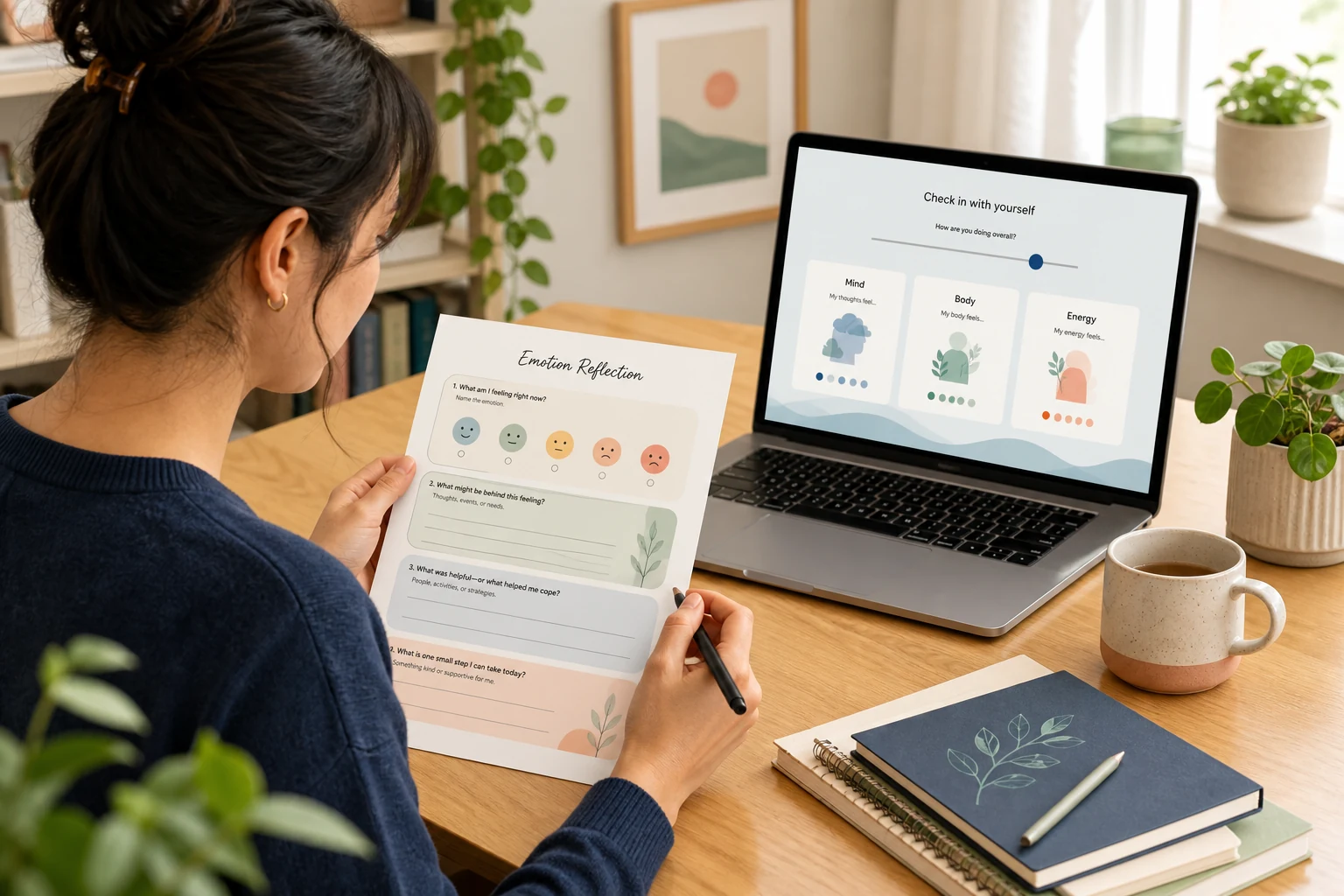
Anxiety and anger do not have to be enemies. They can be signals that something needs attention: a fear, a boundary, a need for rest, a pattern from the past, or a skill that has not been practiced yet. The most useful question is not "What is wrong with me?" but "What is my reaction trying to protect, and what response would fit the situation better?"
If you want a low-pressure place to begin, a calm self-reflection tool can help you notice your anger frequency, intensity, triggers, and expression style. Use the results as information, not a label. Then pair that awareness with one small habit: pause before responding, name the underlying fear, ask for what you need, or talk with a professional when the pattern feels hard to manage alone.

FAQ
Can severe anxiety cause anger?
Severe anxiety can contribute to anger or irritability, especially when the body stays tense for a long time or a person feels trapped, threatened, or unable to control a situation. The anger may be a secondary reaction to fear, overload, shame, or exhaustion. If the reactions are intense or unsafe, it is wise to seek professional support.
How do you deal with anxiety and anger?
Start by calming the body, then naming the pattern. Step away if possible, slow your breathing, unclench tense muscles, and use grounding to return to the present moment. Later, write down the trigger, body signal, thought, and response. Over time, therapy, communication skills, sleep support, movement, and structured self-reflection can all help.
Why do I feel angry at everything?
Feeling angry at everything can happen when stress, anxiety, poor sleep, overstimulation, grief, depression, or ongoing conflict has lowered your emotional bandwidth. Small events then feel bigger than they are. Instead of judging the anger, look for the load underneath it: worry, pressure, unmet needs, fear, pain, or burnout.
What is the relationship between anxiety and aggression?
Anxiety can make a person feel threatened or cornered, which may increase defensive reactions. In some people, that defensiveness becomes verbal aggression, controlling behavior, or intense irritability. Aggression is not an automatic result of anxiety, and it is still important to take responsibility for behavior, repair harm, and get help when reactions feel hard to manage.
Are anxiety and anger different from depression and anger?
They can overlap but are not the same pattern for everyone. Anxiety often involves worry, fear, tension, or avoidance. Depression may involve low mood, loss of interest, fatigue, hopelessness, or irritability. Anger can appear with either one. A qualified professional can help sort out the full picture when symptoms are persistent or disruptive.
What about anxiety and anger in relationships?
In relationships, anxiety may seek reassurance while anger may seek protection or control. That combination can lead to criticism, withdrawal, repeated arguments, or urgent attempts to resolve everything at once. A pause agreement, clearer requests, and calmer follow-up conversations can reduce the cycle.
Can an Inside Out style emotion model help explain it?
Yes, as a simple metaphor. Anxiety and anger can be imagined as different emotional signals trying to protect you in different ways. The metaphor is useful when it helps you ask what each emotion needs. It becomes less useful if it turns into labeling one emotion as bad or one reaction as inevitable.
Should I look for medication for anxiety and anger?
Medication decisions should be discussed with a licensed clinician who can consider your symptoms, health history, risks, and goals. Some people benefit from medication as part of a broader care plan, while others focus on therapy, skills, lifestyle support, or a combination. Avoid choosing medication based only on online lists or peer comments.