Brain Science of Anger: Neural Response Explained
Have you ever felt a sudden wave of heat wash over you during an argument? Perhaps your heart started racing before you even realized why you were upset. Uncontrolled anger can feel overwhelming and mysterious, leaving many people wondering why they react so strongly to small triggers. Do you ever feel like your anger has a mind of its own?
Modern neuroscience offers biological explanations for these intense responses. Your brain is wired to detect threats, but sometimes these circuits become overly sensitive. By understanding the neural mechanics behind anger, you gain power over reactions that once seemed automatic. You can stop feeling like a victim of your emotions and start taking control of your biological responses.
This article demystifies what happens in your brain when anger strikes. We will explore the "security system" of your mind and how it interacts with your logic centers. Understanding these pathways is the first step toward emotional regulation. If you want to see how your own patterns measure up, you can take a free anger test to begin your journey of self-discovery.
How Your Brain Processes Anger: The Neural Pathway
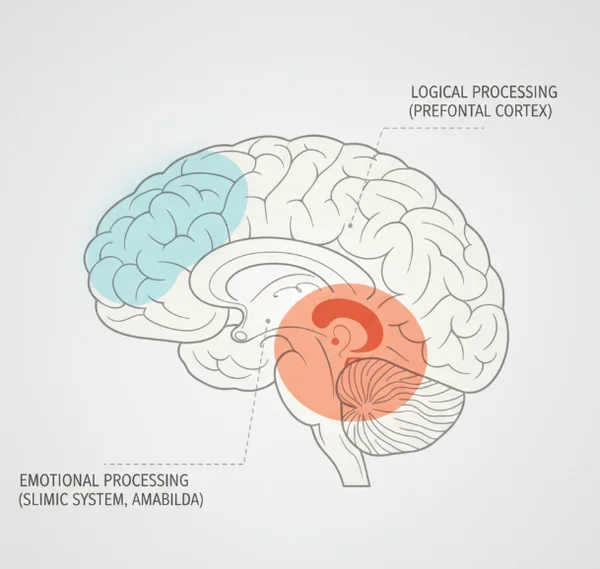
To understand anger, we must look at the brain as a complex communication network. When you encounter a "trigger"—like a rude comment or a stressful deadline—your brain processes this information through specific pathways. This brain response to anger is lightning-fast, often happening before you have a chance to think.
The neural pathway for anger involves a constant tug-of-war between two main areas. One area wants to react instantly to keep you safe, while the other wants to slow down and analyze the situation. When these two areas are out of balance, you might experience "anger issues" or explosive outbursts. Recognizing these patterns is why many people choose to use an anger issues test to see which part of their brain might be taking the lead.
From Trigger to Reaction: The Amygdala's Role
The amygdala is a small, almond-shaped structure deep inside your brain. Think of it as your body's personal smoke detector. Its primary job is to scan the environment for danger. When the amygdala perceives a threat—whether it is a physical danger or a social insult—it sounds the alarm immediately. This is known as the amygdala anger response.
Once the alarm sounds, the amygdala triggers the nervous system. This happens in milliseconds. It doesn't wait for your conscious mind to give permission. This is why you might shout or clinch your fists before you even realize you are angry. In some people, the amygdala is "hyper-reactive," meaning it sees threats everywhere, even where none exist. If you find yourself constantly on edge, taking a multidimensional anger test can help you identify if your internal alarm is set too high.
The Prefrontal Cortex: Your Brain's Anger Regulator
While the amygdala is the alarm, the prefrontal cortex (PFC) is the "CEO" of the brain. Located right behind your forehead, this area is responsible for logic, decision-making, and social behavior. The PFC's job is to evaluate the alarm sent by the amygdala. It asks, "Is this person actually a threat, or am I just stressed?"
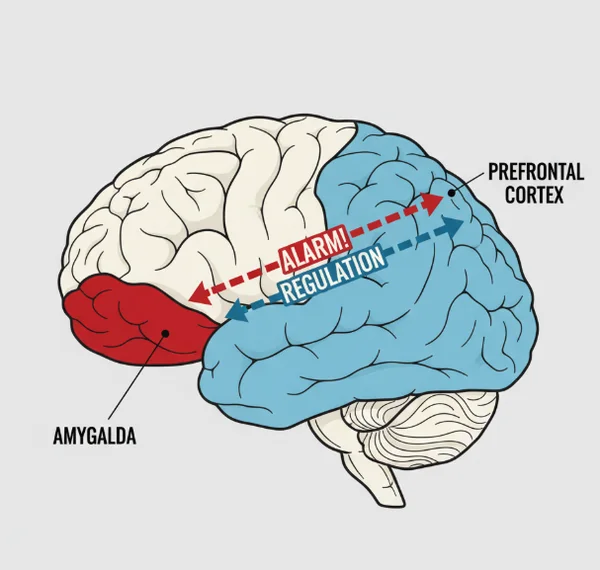
In a healthy emotional response, the prefrontal cortex acts as a brake. It sends signals back to the amygdala to "cool down" the emotional fire. However, when we are tired, stressed, or dealing with chronic anger, this braking system weakens. The connection between the logic center and the emotion center becomes frayed. Strengthening this connection is a key part of anger management. Understanding how your "logical brain" handles stress is a great reason to start your test today.
Understanding the Neurochemical Basis of Anger
Anger is not just about brain structures; it is also about the chemicals that flow through your blood. These chemicals, or neurotransmitters and hormones, act as messengers. They tell your heart to beat faster and your muscles to tense up. This chemical cocktail is what makes anger feel so physical and sometimes so hard to shake off.
When we talk about the neural pathways of anger, we are talking about how these chemicals move from one neuron to another. If your brain is flooded with "stress chemicals," it becomes very difficult to think clearly. This explains why we often say things we regret when we are angry—our "thinking brain" is literally being drowned out by chemicals designed for survival.
Adrenaline and the Fight-or-Flight Response
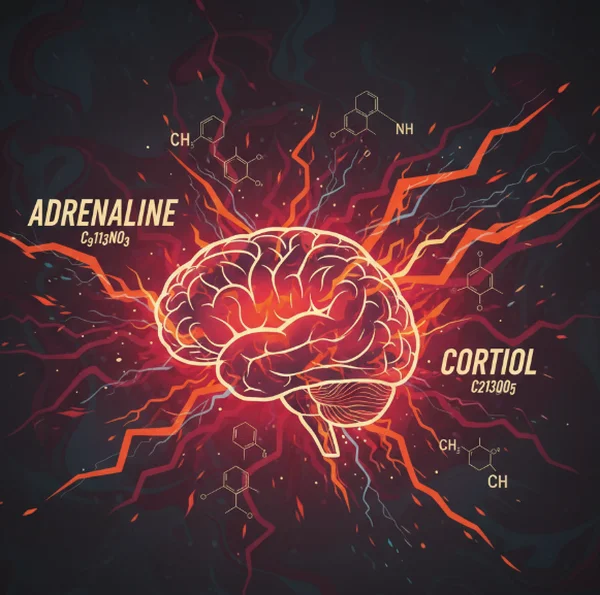
The moment your amygdala identifies a trigger, it signals the adrenal glands to release adrenaline. This is the primary driver of the "fight-or-flight" response. Adrenaline provides a sudden burst of energy. Your pupils dilate, your breath quickens, and your blood pressure rises. This response was vital for our ancestors who had to fight off predators.
In the modern world, we rarely need to fight physically. However, our brains still react to a traffic jam or a mean email as if it were a life-threatening predator. This surge of adrenaline makes you feel "charged up." If you don't find a way to release this energy safely, it can turn into chronic irritability. You can use our tracking tools to monitor how often you experience this physical surge and learn effective management techniques.
Cortisol and the Persistence of Anger
While adrenaline is the "spark" that starts the fire, cortisol is the "fuel" that keeps it burning. Cortisol is often called the primary stress hormone. Its role is to keep the body on high alert even after the initial trigger is gone. This is why you might still feel angry hours after a minor disagreement.
High levels of cortisol for long periods can be damaging to your health. It can lead to sleep problems, a weakened immune system, and even memory issues. If your anger seems to linger or if you find it hard to "let go" of grudges, you likely have elevated cortisol levels. Understanding these biological cycles is essential. Taking a scientific anger assessment provides insights into whether your anger is a short-term reaction or a long-term state of being.
Practical Applications of Neuroscience in Anger Management
The most exciting thing about understanding anger from brain science is that the brain is plastic. This means your neural pathways are not set in stone. Through a concept called neuroplasticity, you can actually "rewire" your brain to respond more calmly to triggers. You are not stuck with the brain you have today; you can build a more resilient one.
By applying what we know about the amygdala and the prefrontal cortex, we can develop specific strategies to stay calm. Instead of just "trying to be nice," you can use biological "hacks" to signal your brain that it is safe. This turns anger management from a struggle of willpower into a process of biological training.
Rewiring Neural Pathways Through Mindfulness
Mindfulness is more than just a buzzword; it is a powerful tool for changing brain structure. Studies show that regular mindfulness practice can actually shrink the amygdala and thicken the prefrontal cortex. This makes your "smoke detector" less sensitive and your "logical CEO" much stronger.
When you practice mindfulness, you learn to observe the physical sensations of anger—the racing heart, the tight jaw—without reacting to them immediately. This short pause gives your prefrontal cortex time to step in and apply the brakes. If you combine these practices with a personalized report, you can target the specific triggers that affect you the most.
How Understanding Your Brain Changes Response Patterns
Knowledge is a form of power. When you feel anger rising, simply saying to yourself, "This is just my amygdala sounding a false alarm," can reduce the intensity of the emotion. This is called "affective labeling." By naming the biological process, you shift the activity from the emotional center of the brain to the logical center.
Recognizing that anger is a biological response reduces the shame of "losing your temper." Instead of seeing yourself as a "bad person," you can view yourself as having a sensitive alarm system that needs recalibration. This shift in perspective is often the turning point in a self-discovery journey toward better emotional health.
Reshaping Your Emotional Future
Neuroscience reveals that anger is a biological response, deeply rooted in ancient brain structures and chemistry. Your amygdala acts as an alarm, your prefrontal cortex acts as a regulator, and chemicals like adrenaline and cortisol drive the physical experience. While these systems are designed to protect us, they can often become overactive in our high-stress modern lives.
Fortunately, your brain isn't fixed—you can actively reshape these neural pathways over time. By understanding the science and using the right tools, you can move from reactive outbursts to calm, thoughtful responses. You don't have to navigate this journey alone or guess at your progress.
To truly understand and manage your anger, you need to start by measuring your current patterns. Our assessment helps identify your unique anger profile—frequency, intensity, and specific triggers—giving you a clear baseline. Visit the homepage to see your results through our scientifically-backed assessment. Whether you choose the basic summary or the deep-dive AI report, you will gain the clarity needed to start rewiring your brain for a more peaceful life.
Frequently Asked Questions About Anger and the Brain
How does brain chemistry affect my anger levels?
Brain chemistry acts as the communication system for your emotions. If you have low levels of serotonin, your "logical brain" has a harder time controlling your "emotional brain." Simultaneously, high levels of testosterone or dopamine can sometimes increase impulsivity. When you take an online anger test, you are essentially looking for patterns that suggest how these chemicals might be influencing your behavior.
Can I physically change how my brain responds to anger triggers?
Yes, this is possible through "neuroplasticity." Regular practice of relaxation techniques, mindfulness, or cognitive behavioral strategies strengthens the pathways between your prefrontal cortex and amygdala. Over time, your brain becomes naturally better at "braking" before an outburst occurs.
Why do some people have more intense anger responses than others?
Differences in anger intensity can be caused by genetics, past trauma, or even chronic stress. Some people are born with a more sensitive amygdala, while others may have experienced environments that "trained" their brain to always be on high alert. Using a free tool to assess your patterns can help you see where you fall on the spectrum of anger intensity compared to others.
Is anger always a bad thing from a neurological perspective?
Not at all. From a neurological standpoint, anger is a survival mechanism. It provides the energy and focus needed to overcome obstacles or defend against injustice. The problem is not anger itself, but rather an "overactive" response that triggers in situations where it isn't helpful or necessary.
How can I tell if my anger response is normal or problematic?
A "normal" anger response is proportional to the trigger and fades relatively quickly. It becomes problematic if it feels uncontrollable, leads to aggression, or happens frequently over minor issues. If you are unsure, the best way to find out is to use a scientifically-backed anger test to get an objective look at your emotional patterns.