Emotional Outbursts: Meaning, Examples, Causes, and How to Respond
Emotional outbursts are sudden, intense reactions that can feel bigger than the moment itself. They may look like yelling, crying, shutting down, snapping at a coworker, slamming a door, or saying something you regret before you have time to think. One outburst does not define a person. A repeated pattern, though, can point to stress, unmet needs, emotional dysregulation, or a need for better self-awareness. If anger is the emotion that shows up most often, a private anger self-assessment can help you notice patterns in frequency, intensity, triggers, and expression style while keeping the focus on reflection rather than labels.
What Emotional Outbursts Mean
An emotional outburst is an intense expression of feeling that arrives quickly and is hard to regulate in the moment. Anger is common, but outbursts can also involve fear, shame, sadness, panic, embarrassment, or overwhelm. The visible behavior may be loud, such as shouting, or quiet, such as going blank and refusing to speak.
The emotional outburst meaning is not simply "bad temper." It is more useful to think of an outburst as a moment when the nervous system, thoughts, and body signals outrun the person's usual ability to pause. Some people use synonyms such as blowup, meltdown, eruption, or sudden emotional reaction. Those words can describe the scene, but they do not explain what is happening underneath.
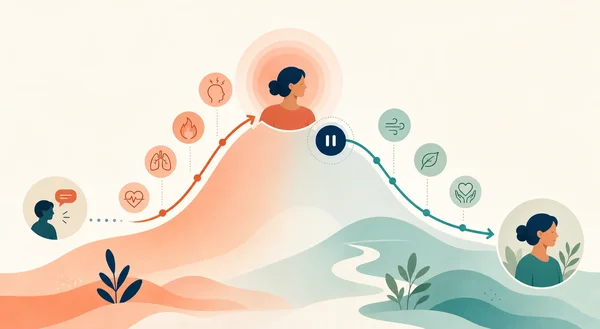
Outbursts often have three layers:
- A trigger, such as criticism, sensory overload, time pressure, rejection, unfairness, fatigue, or feeling ignored.
- A body surge, such as heat, tight muscles, a racing heart, shaky hands, or a feeling of pressure in the chest.
- An expression pattern, such as yelling, crying, sarcasm, leaving the room, blaming, or breaking a boundary.
Seeing those layers separately makes the problem less mysterious. It also gives you more places to intervene.
Emotional Outburst Examples in Everyday Life
Emotional outburst examples are often ordinary on the surface. The reaction, not the event, is what makes the moment stand out.
At work, someone may receive brief feedback and suddenly feel humiliated. They interrupt, argue, or send a sharp message they later wish they had rewritten. At home, a parent may hear a child refuse bedtime and feel a quick wave of exhaustion and anger. In a relationship, a small change in tone may feel like rejection, leading to accusations or withdrawal. Online, a comment may trigger a long reply written from the hottest part of the emotion.
Children may show emotional outbursts through crying, screaming, running away, throwing objects, or refusing transitions. A 5 year old, 7 year old, or 10 year old can still be learning how to name feelings, wait, shift attention, and recover after disappointment. The same behavior in an adult deserves a different lens: adults have more responsibility for repair and safety, but they may still lack practiced regulation skills.
Not every outburst is anger. Emotional crying outbursts can happen when sadness, fear, relief, or shame becomes too much to hold in. Some people look angry when they are actually overwhelmed, scared, overstimulated, or deeply embarrassed.
Why Sudden Emotional Outbursts Happen
Sudden outbursts of emotion usually have more than one cause. A useful question is not "What is wrong with me?" but "What made my regulation capacity smaller today?"
Common contributors include poor sleep, chronic stress, hunger, pain, substance use, medication side effects, hormonal shifts, sensory overload, grief, conflict, trauma reminders, and long periods of suppressing emotion. When several stack together, a small trigger can become the last push.
Emotional dysregulation is the broader term for difficulty managing emotional intensity, recovery time, or behavior during strong feelings. It can appear in people with no formal mental health condition, and it can also occur alongside ADHD, autism, anxiety, depression, bipolar disorder, borderline personality disorder, trauma-related symptoms, brain injury, dementia, or some neurological conditions. This does not mean an outburst proves any one condition. It means repeated, intense, or risky outbursts are worth taking seriously.
Anger and emotional outbursts often interact with shame. After the moment passes, the person may feel guilty and promise it will not happen again. Promises help less than pattern tracking. A structured anger reflection tool can make the pattern more concrete by separating triggers, intensity, and expression style instead of treating every incident as a personal failure.

Emotional Outbursts in Adults, Children, ADHD, and Autism
Emotional outbursts in adults often become most visible when they affect trust, work, parenting, or close relationships. Adults may feel confused because they can be calm in many situations, then lose control in one specific pattern: criticism, interruption, rejection, traffic, money stress, or feeling disrespected. The narrowness of the pattern is useful information.
ADHD and emotional outbursts can be connected because attention, impulse control, frustration tolerance, and emotional recovery all rely on executive function. Some adults and children with ADHD describe emotions as fast, intense, and hard to redirect once activated. Support may include routines, sleep protection, behavior strategies, therapy skills, medication review with a prescriber, and environmental adjustments.
Emotional outbursts autism searches often refer to moments of overload rather than deliberate misbehavior. Sensory input, unexpected change, communication strain, or social fatigue may contribute. Helpful responses often include reducing stimulation, using clear language, allowing recovery time, and planning ahead for transitions.
For children, the goal is skill-building. Caregivers can name the feeling, set firm safety limits, offer two simple choices, praise words instead of aggression, and practice calming routines when the child is already settled. During the outburst, long lectures rarely help. Afterward, brief repair and repeated practice matter more.
How to Control Emotional Outbursts in the Moment
The goal during an outburst is not to win the argument. It is to lower intensity enough that your thinking brain can rejoin the conversation.
Use a short pause script. Say, "I am too activated to respond well. I need ten minutes, and I will come back." Then actually come back. A pause without return can feel like avoidance to the other person.
Try a body-first reset. Put both feet on the floor, lengthen your exhale, unclench your jaw, and look around the room for five neutral objects. This shifts attention from the trigger to the present environment.
Reduce the audience. If other people are watching, shame and defensiveness can rise. Move to a quieter place if it is safe and respectful to do so.
Lower the volume of the problem. Ask yourself, "What is the next smallest safe action?" That might be drinking water, stepping outside, writing the first sentence of what you want to say, or asking for the conversation to continue later.
Avoid the three accelerators: proving your point, replaying the insult, and adding old conflicts. These make the emotional fire larger. If you are already yelling, threatening, blocking someone from leaving, driving aggressively, or feeling at risk of harming yourself or someone else, stop the interaction and seek immediate support from local emergency services or a crisis resource.

What to Do After an Outburst
The repair stage matters because it turns a painful moment into information. Wait until your body has settled. Then write down four details: what happened, what you felt in your body, what story your mind told, and what you did. Over time, this becomes a trigger map.
A simple repair message has three parts:
- Name the behavior: "I raised my voice and interrupted you."
- Name the impact: "That made the conversation feel unsafe and unfair."
- Name the next step: "I am going to pause earlier next time and come back after ten minutes."
Avoid repair messages that secretly reopen the argument, such as "I am sorry, but you made me angry." You can discuss the trigger later. First repair the behavior.
If you are supporting someone else, keep your boundary clear. Calm does not mean accepting insults, threats, or harm. You might say, "I want to talk when we can both be respectful. I am stepping away for now." Consistent boundaries protect the relationship more than repeated debate during peak emotion.
Long-term coping with emotional outbursts often includes sleep routines, movement, fewer high-conflict conversations when exhausted, therapy skills such as CBT or DBT, communication practice, and professional support when patterns feel unmanageable.
When to Reflect Further and Get Support
Consider extra support if emotional outbursts are frequent, escalating, frightening to others, affecting work or school, damaging relationships, connected to substance use, or followed by shame that does not lead to change. Also seek help promptly if outbursts include threats, violence, self-harm thoughts, unsafe driving, or loss of memory around the event.
Self-reflection can be a low-pressure first step. AngerTest.org is designed as an informational tool for noticing anger patterns, not as a clinical service. If anger is the emotion behind many of your outbursts, you can explore the free anger test resource to organize what you are experiencing and decide what kind of support might fit. For persistent or risky patterns, a licensed mental health professional can provide a full evaluation and personalized care.
Emotional outbursts are not a character sentence. They are signals. When you learn the signals, you can build earlier pauses, clearer boundaries, better repair, and a more realistic plan for the moments when emotions rise fast.

FAQ
What mental illness causes outbursts?
Outbursts can occur with several mental health or neurodevelopmental concerns, including ADHD, autism, anxiety, depression, bipolar disorder, trauma-related symptoms, borderline personality disorder, and intermittent explosive disorder. They can also relate to sleep loss, substances, pain, medication effects, hormonal changes, or neurological conditions. A pattern of outbursts does not point to one single cause by itself.
How do I stop emotional outbursts?
Start by tracking the pattern, then build a pause plan before the next trigger. Notice body signals, use a short time-out phrase, slow your exhale, lower stimulation, and return to repair the conversation later. If outbursts are frequent or unsafe, work with a mental health professional on deeper regulation skills.
How do you treat emotional dysregulation?
Support depends on the cause and severity. It may include therapy skills, parent training for children, sleep and stress changes, medication review, ADHD or autism supports, trauma-informed care, or relationship communication work. The most helpful plan is usually specific to the person's triggers, body signals, and environment.
Why am I having sudden emotional outbursts?
Sudden outbursts often happen when stress, fatigue, unmet needs, or past experiences reduce your ability to pause. The trigger may look small, but your body may be responding to a larger load. Tracking sleep, hunger, conflict patterns, sensory overload, and recovery time can reveal what is making the reaction stronger.
Are emotional outbursts a sign of ADHD?
They can be associated with ADHD, but they are not specific to ADHD. People with ADHD may struggle with fast-rising emotions, impulsive reactions, and slower recovery after frustration. Other factors can create similar outbursts, so it is better to look at the full pattern rather than one symptom.
Can medication cause emotional outbursts?
Some medications, dose timing, sleep changes, appetite changes, or side effects may affect irritability or emotional control for some people. Do not stop or change prescribed medication on your own. If you notice a timing pattern, write it down and discuss it with the prescribing clinician.
What is the difference between an outburst and emotional dysregulation?
An outburst is the visible event: yelling, crying, shutting down, or acting impulsively. Emotional dysregulation is the broader difficulty with managing emotional intensity, behavior, and recovery. Repeated outbursts may be one sign that regulation skills or support need attention.