Free Anger Test & Mindfulness: Calm Anger and Regulate Emotions
Does anger often feel like an uncontrollable storm, leaving you with regret and strained relationships? Imagine learning to navigate those powerful emotions instead of being swept away. This guide will show you how mindfulness for anger management – a simple yet powerful practice – can help you understand, reduce, and take charge of your anger. Many wonder, 'how can I control my anger?' We'll explore that first crucial step: understanding your unique patterns.
Mindfulness offers practical techniques to calm the storm within, leading to greater peace and emotional control. Before you can manage your reactions, you must first understand them. Gaining insight into your personal anger triggers and intensity is a foundational step. You can take our free anger test to begin this journey of self-discovery today.

What is Mindfulness & How it Transforms Anger?
At its core, mindfulness is the simple yet profound practice of paying attention to the present moment on purpose and without judgment. It’s not about emptying your mind or stopping your thoughts; it's about observing them without getting entangled. When anger arises, our typical reaction is to either suppress it or lash out—both of which are often destructive. Mindfulness creates a crucial space between the trigger and your response.
This practice transforms your relationship with anger by fostering self-awareness. Instead of being consumed by rage, you learn to see it as a temporary emotional state. You notice the physical sensations—the clenched jaw, the racing heart, the heat rising in your chest—and acknowledge the thoughts fueling the feeling. This observation creates a pause, giving you the power to choose a more constructive response.
The Core Principles of Mindfulness Practice
To truly grasp how mindfulness works, it's helpful to understand its foundational principles. First is present-moment awareness, which involves anchoring your attention to your current experience, such as the sensation of your breath. The second is non-judgmental observation, where you notice thoughts and feelings as they are, without labeling them "good" or "bad."
When you feel anger bubbling up, you can apply these principles. Instead of thinking, "I shouldn't be this angry," you can simply acknowledge, "Anger is present right now." This simple shift reduces the secondary anger and self-criticism that often intensify the initial emotion. Over time, this practice builds resilience and emotional maturity.
Bridging Mindfulness and Emotional Regulation
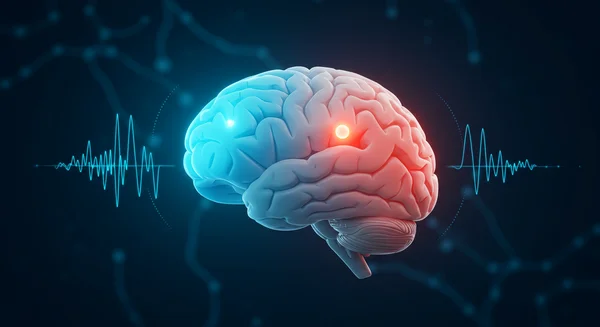
Emotional regulation is the ability to manage and influence which emotions you have, when you have them, and how you experience and express them. Mindfulness is a powerful tool for enhancing this skill. By regularly practicing, you train your brain to be less reactive. Neurological studies have shown that mindfulness can strengthen the prefrontal cortex, the part of the brain responsible for rational thinking and impulse control, while calming the amygdala, the brain's emotional alarm system.
This means that when faced with a frustrating situation, a mindful brain is better equipped to assess the situation calmly rather than defaulting to a fight-or-flight response. You learn to soothe your own emotional state, making emotional regulation an active skill rather than a passive hope. For a deeper understanding of your emotional baseline, taking an anger assessment test can provide valuable, personalized insights.
Practical Mindfulness Techniques for Calming Anger
The true power of mindfulness isn't just in understanding it, but in making it a part of your daily life. The following techniques are simple, accessible, and can be used anywhere to calm anger as it arises. They are not about suppressing the emotion but about processing it constructively.
These methods help you ground yourself in the present, preventing your anger from spiraling out of control. Consistent practice is key to making these techniques second nature. Start with just a few minutes each day to build your emotional management muscles.
Mindful Breathing: Your Anchor in the Storm
When anger hits, your breathing often becomes shallow and rapid, signaling stress to your body. Mindful breathing reverses this process, sending a message of calm to your nervous system. It's a simple yet powerful anchor that you can use anytime, anywhere.
Here’s how to do it:
- Find a comfortable position, either sitting or standing.
- Close your eyes or soften your gaze.
- Take a slow, deep breath in through your nose, counting to four. Feel your abdomen expand.
- Hold the breath for a count of two.
- Exhale slowly through your mouth, counting to six. Notice the feeling of release.
- Repeat this cycle for 5-10 breaths, focusing all your attention on the sensation of breathing.
If your mind wanders to the source of your anger, gently guide it back to your breath. This exercise can de-escalate an intense emotional reaction in minutes.
The Body Scan: Noticing Anger's Physical Manifestations
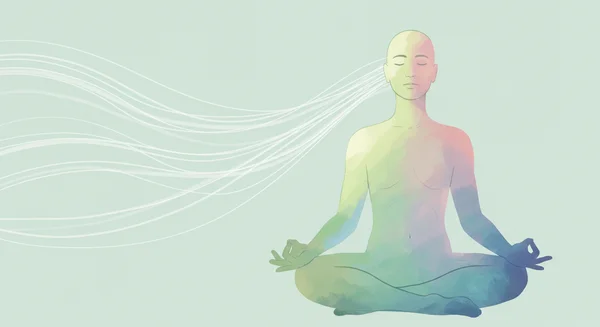
Anger isn't just a mental state; it's a full-body experience. A body scan helps you become intimately aware of how anger manifests physically, allowing you to catch it early. This increased awareness is a crucial step in managing emotional outbursts.
To perform a body scan:
- Lie down comfortably on your back with your arms at your sides.
- Bring your attention to your toes. Notice any sensations—tingling, warmth, tension—without judgment.
- Slowly move your awareness up through your body: your feet, ankles, legs, torso, arms, hands, neck, and finally, your head.
- Spend a few moments on each body part, simply observing what you feel.
- When you notice areas of tension, which often correlate with anger (like a tight jaw or clenched fists), consciously try to breathe into that area and release it on the exhale.
This practice helps you explore your anger on a physical level, making you more attuned to its early warning signs.
Mindful Observation: Responding, Not Reacting
The ultimate goal of mindfulness for anger is to shift from unconscious reacting to conscious responding. Mindful observation involves watching your angry thoughts and feelings arise like clouds passing in the sky—you see them, acknowledge them, but don't have to get carried away by them.
When you feel anger building, try to mentally step back and become an observer. Name the emotion: "This is anger." Name the thoughts: "I am having the thought that this is unfair." This act of labeling creates distance and reduces the thought's power over you. It allows you to see the situation with more clarity and choose a response that aligns with your values, rather than one driven by raw emotion.
Integrating Mindfulness into Daily Life for Lasting Change
For mindfulness to be truly effective, it needs to become more than just a crisis-management tool. Integrating it into your daily routine creates a baseline of calm and resilience that makes you less susceptible to anger triggers in the first place. Lasting change comes from small, consistent efforts.
Start by choosing one or two simple practices to incorporate into your day. The goal isn't to achieve a state of constant bliss but to cultivate a steady awareness that supports you through life's challenges. Remember that understanding your starting point is key; a free online anger test can provide that crucial first snapshot of your emotional habits.
Cultivating Daily Mindfulness Habits
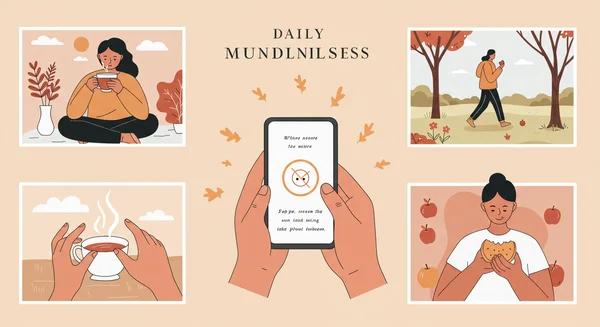
Making mindfulness a habit doesn't require hours of meditation. You can weave it into activities you already do. This approach, known as informal practice, makes mindfulness accessible and sustainable.
Here are a few ideas:
- Mindful Morning: Before checking your phone, spend two minutes focusing on your breath.
- Mindful Commute: Instead of listening to music or a podcast, pay attention to the sights and sounds around you without judgment.
- Mindful Eating: Savor one meal a day. Notice the colors, smells, textures, and tastes of your food.
- Digital Detox: Set specific times to check email or social media, and when you do, notice how it makes you feel.
These small moments of presence accumulate over time, strengthening your ability to remain centered.
Overcoming Common Challenges in Mindfulness Practice
It's normal to face challenges when you begin practicing mindfulness. Your mind will wander, you might feel restless, or you may become frustrated that you're not "doing it right." These are not signs of failure; they are part of the process.
The key is to approach these challenges with the same non-judgmental attitude you're cultivating. When you notice your mind has drifted, gently and kindly guide it back to your anchor, whether it's your breath or bodily sensations. Think of it as training a puppy—it requires patience, repetition, and kindness. Every time you bring your attention back, you are strengthening your mindfulness muscle. If you find your anger is a persistent challenge, it might be time to understand your triggers on a deeper level.
Final Thoughts
Embrace mindfulness as a powerful ally on your journey toward a calmer, more controlled you. By practicing present-moment awareness, you create the space needed to transform your relationship with anger. You learn to respond with wisdom rather than react with impulse. The techniques of mindful breathing, body scanning, and observation are not quick fixes but lifelong skills that foster profound emotional health.
Remember, the first step to managing any challenge is understanding it. Mindfulness helps you observe your anger in the moment, and a tool like the scientifically-backed anger test can help you understand your patterns over time. Take the free anger test to gain deeper insights into your triggers, intensity, and expression of anger. Start your journey toward emotional freedom today.

Your Questions Answered
Can mindfulness alone solve all my anger issues?
Mindfulness is an incredibly effective tool for managing anger, but it may not be a complete solution for everyone. For deep-seated anger issues, especially those stemming from trauma, it is best used in conjunction with professional therapy. It is a skill for self-management, not a substitute for professional diagnosis or treatment. This article and any tests on our site are for informational purposes only.
How does mindfulness specifically help with emotional regulation?
Mindfulness enhances emotional regulation by improving your self-awareness and impulse control. It trains you to notice an emotion like anger as it begins, rather than when it's already at a peak. This early recognition gives you a critical window of opportunity to use techniques like mindful breathing to calm your physiological response and choose how you want to act, rather than being driven by the emotion itself.
Where can I find a scientific anger assessment to understand my patterns?
To understand your unique anger patterns—including frequency, triggers, and intensity—a structured assessment can be very helpful. Our website provides a free, multidimensional anger test designed to offer you confidential and immediate insights. This tool serves as an excellent starting point for self-discovery and can complement the mindfulness practices discussed here. You can gain deeper insights by taking the test on our homepage.