Impulse Control Disorder Symptoms: Signs, Examples, and When to Seek Help
Impulse control disorder symptoms can be confusing because everyone acts impulsively sometimes. A sharp comment, an unplanned purchase, or a moment of impatience does not automatically point to a mental health condition. The more useful question is whether urges repeatedly feel hard to pause, lead to harm or conflict, and leave the person feeling ashamed, relieved, frightened, or out of control afterward. This guide explains the common warning signs, examples in adults and children, DSM-5 language, and the difference between impulse control challenges, ADHD, OCD, and anger patterns. If anger is part of the picture, a free anger self-assessment can offer a private reflection point, not a label.

What Counts as an Impulse Control Disorder Symptom?
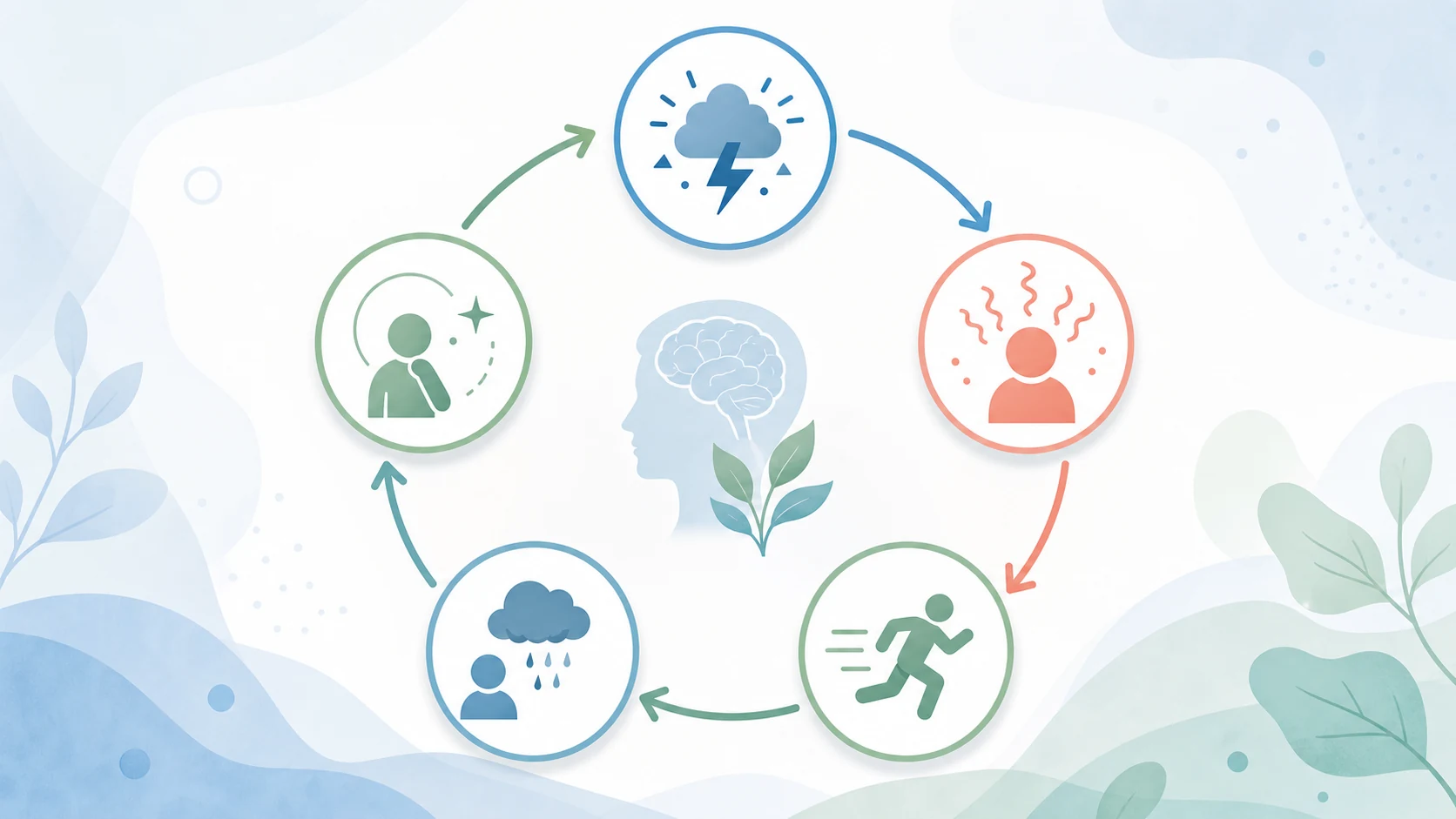
Impulse control disorder symptoms usually involve a repeated difficulty resisting an urge, drive, or temptation even when the likely result is harmful. The behavior may be aggressive, destructive, risky, rule-breaking, or socially disruptive. What makes the pattern clinically important is not one single mistake. It is the recurring cycle: tension or pressure builds, the person acts, relief or pleasure follows briefly, and then consequences arrive.
Common signs can include sudden verbal outbursts, physical aggression, damaging property, stealing items that are not needed, setting fires for emotional gratification, lying, violating major rules, or acting without considering safety. Some people describe the experience as a fast switch from "I can handle this" to "I already did it." Others notice warning signs in the body first, such as heat, muscle tension, racing thoughts, or a sense of being trapped.
These symptoms may affect relationships, school, work, money, legal safety, or self-respect. A person may sincerely regret what happened and still struggle to slow the next urge. That gap between regret and repeat behavior is one reason professional support can be useful.
The Typical Impulse Cycle
Many impulse problems follow a pattern that is easier to see after the event than during it. First, a trigger appears. It might be criticism, boredom, rejection, a perceived insult, access to something tempting, or a stressful demand. Second, internal tension rises. The person may feel restless, angry, excited, numb, or focused on one action as if it will release the pressure.
Third, the behavior happens quickly. This can look like shouting, throwing something, stealing, breaking a rule, driving recklessly, sending a hostile message, or making a risky choice. Fourth, there may be relief, pleasure, or a brief sense of control. Finally, guilt, embarrassment, fear, conflict, or practical consequences may follow.
Not every person experiences every stage. Some feel little pleasure afterward. Some describe shame before the behavior as well as after it. Still, mapping the cycle helps because it shows where intervention can happen: noticing triggers, naming body cues, adding delay, changing the environment, and asking for support before the behavior reaches full force.
Impulse Control Examples in Adults
Impulse control disorder symptoms in adults often show up where consequences are immediate: relationships, parenting, work, driving, spending, substances, and conflict. An adult might repeatedly explode during disagreements, threaten or insult people they care about, damage objects during arguments, or feel unable to stop a risky behavior once the urge has started.
Some examples are more hidden. A person may steal small items despite being able to pay, lie impulsively to escape discomfort, escalate online arguments, or break workplace rules even after warnings. Others mainly notice the emotional aftermath: "I knew this would hurt my relationship, but in that moment I could not slow down."
Anger can be part of impulse control, especially when the behavior is aggressive or destructive. But anger and impulse control are not identical. Anger is an emotion; impulse control is the ability to pause, choose, and act in line with values even while emotions are strong. For readers trying to separate anger intensity from impulsive behavior, an anger pattern self-reflection tool can help organize observations such as frequency, triggers, intensity, and expression style.
Impulse Control Disorder Symptoms in Kids and Teens
Children and teens are still developing self-regulation, so some impulsive behavior is age-appropriate. Younger children interrupt, grab, tantrum, and act before thinking because their brains and skills are still maturing. Concern increases when the behavior is intense, persistent, harmful, very different from peers, or causing repeated problems at home, school, or with friends.
Possible symptoms in kids and teens include frequent aggressive outbursts, severe temper tantrums, bullying or intimidation, cruelty, fire-setting, stealing, serious rule violations, lying, running away, or repeated actions that put the child or others at risk. In school, adults may notice constant disruption, quick escalation, refusal to follow boundaries, or an inability to repair conflicts after calming down.
Context matters. Sleep loss, trauma, anxiety, learning difficulties, family stress, bullying, ADHD, substance use, and developmental differences can all affect impulse control. A careful evaluation looks at the whole child, not just the behavior that caused alarm. Parents and caregivers can start by tracking patterns: time of day, trigger, body cues, what happened before, what helped, and what made things worse.

The DSM-5 Category and the "7 Types" Search Question
People often search for "7 types of impulse control disorder," but the answer depends on whether the source is using DSM-5 categories, older classifications, or a broad educational list. In DSM-5 language, impulse-related conditions are grouped under "disruptive, impulse-control, and conduct disorders." This category includes oppositional defiant disorder, intermittent explosive disorder, conduct disorder, pyromania, kleptomania, antisocial personality disorder, and other specified or unspecified disruptive, impulse-control, and conduct disorders.
Intermittent explosive disorder is especially relevant when the main symptom is repeated aggressive outbursts that are out of proportion to the trigger. Kleptomania involves recurrent urges to steal items that are not needed for personal use or financial gain. Pyromania involves deliberate fire-setting linked to fascination, tension, and relief or pleasure. Oppositional defiant disorder and conduct disorder are usually discussed in children and adolescents, with conduct disorder involving more severe violations of rights, rules, or safety.
The list is not meant for self-labeling. It is a way to understand why symptoms can look different from person to person. One person's difficulty may center on anger outbursts; another's may center on theft urges, rule violations, or dangerous fascination with fire.

Impulse Control, ADHD, and OCD: Important Differences
Poor impulse control can be a symptom in several conditions, which is why the context matters. ADHD is not classified as an impulse control disorder, but impulsivity can be a core ADHD feature. In ADHD, impulsivity may look like interrupting, acting before instructions are complete, difficulty waiting, quick decisions, or seeking stimulation. The behavior is not always aggressive or rule-violating.
OCD is also different. OCD usually involves obsessions, compulsions, anxiety, and ritualized behaviors aimed at reducing distress or preventing a feared outcome. Some behaviors can look repetitive or hard to resist, but the motivation is often different from the tension-relief pattern seen in some impulse control disorders.
Substance use, mood disorders, trauma responses, anxiety, sleep problems, and neurological factors can also affect inhibition. This overlap is one reason online articles can educate but cannot replace a qualified professional's assessment. If behavior is dangerous, escalating, or causing serious consequences, it is worth involving a licensed clinician, pediatrician, psychiatrist, therapist, or crisis resource depending on urgency.
What Causes Impulse Control Disorder Symptoms?
There is rarely one cause. Research and clinical descriptions commonly point to a mix of biological, psychological, developmental, and environmental factors. Family history may play a role for some people. Brain systems involved in reward, threat detection, emotional regulation, and planning can also influence how quickly an urge becomes action.
Environment matters too. Chronic stress, exposure to violence, inconsistent boundaries, trauma, harsh punishment, peer pressure, substance use, and unstable routines can make self-control harder. For children, impulsive behavior may also reflect unmet developmental, educational, or emotional needs. For adults, accumulated stress, relationship conflict, job strain, alcohol or drug use, and untreated mental health conditions can lower the pause between feeling and action.
None of these factors excuse harmful behavior, but they can make change more practical. When a person understands the conditions that make impulses stronger, they can build a plan around prevention instead of relying on willpower alone.
A Practical Symptom Checklist for Self-Reflection
Use these questions as a reflection tool, not as a formal screening result:
- Do urges feel sudden, intense, and difficult to delay?
- Do behaviors repeat even after serious consequences?
- Is there a buildup of tension before the behavior?
- Is there relief, pleasure, numbness, or release during or right after it?
- Do guilt, shame, fear, or relationship damage follow?
- Do other people describe the behavior as disproportionate or unsafe?
- Does the pattern happen across settings, such as home, school, work, or public spaces?
- Are substances, sleep loss, stress, or specific relationships making it worse?
If several answers are yes, the next useful step is not self-judgment. It is pattern tracking. Write down what happened, what you felt in your body, what you believed in the moment, what the urge wanted you to do, and what happened afterward. Over time, this turns a blur into data.
What Can Help Before and During an Urge?
Impulse control strategies work best when they are simple enough to use under pressure. A first step is adding friction. Leave the room, put distance between yourself and the object or person involved, hand over car keys, log out of a risky app, or ask someone to stay nearby. A delay of even two minutes can change the outcome.
Next, use body-based regulation. Slow breathing, cold water on the face, unclenching the hands, relaxing the jaw, or standing with both feet on the floor can signal that the moment is survivable. Then name the urge in plain language: "I am having the urge to shout," or "I am having the urge to take something." Naming creates a small space between the person and the behavior.
For repeated patterns, therapy can help build skills around triggers, thoughts, family conflict, trauma, problem-solving, and repair. Cognitive behavioral approaches, parent training, family therapy, anger management work, and medication may be considered depending on the person and the condition involved. The right plan depends on age, risk, co-occurring concerns, and severity.

Using Anger Self-Reflection Alongside Professional Support
When impulsive behavior involves anger, it can help to separate four dimensions: how often anger appears, how intense it feels, what triggers it, and how it is expressed. Someone may feel anger often but express it safely. Another person may feel anger less often but have explosive reactions when it does appear. Those patterns suggest different support needs.
AngerTest.org is built around educational self-awareness, privacy, and nonjudgmental reflection. If you want a starting point for organizing your anger patterns, you can explore a private anger test experience and use the results as notes for your own reflection or a conversation with a professional. The tool is not a replacement for mental health care, and it should not be used to make decisions about safety, medication, or legal concerns.
Seek professional help promptly if impulses involve violence, threats, fire-setting, theft, self-harm, abuse, unsafe driving, weapons, severe substance use, or fear that someone may be hurt. Support is not about proving that a person is "bad." It is about reducing harm, building pause skills, and creating a safer plan before the next high-pressure moment.
FAQ
What are the 5 impulse control disorders?
Many educational sources highlight intermittent explosive disorder, kleptomania, pyromania, oppositional defiant disorder, and conduct disorder. DSM-5 uses the broader category "disruptive, impulse-control, and conduct disorders," which also includes antisocial personality disorder and other specified or unspecified conditions.
What is poor impulse control a symptom of?
Poor impulse control can appear in impulse control disorders, ADHD, substance use problems, mood disorders, trauma responses, sleep deprivation, stress, brain injury, and normal development in children. The meaning depends on age, context, frequency, severity, and consequences.
Is there such a thing as an impulsive disorder?
Yes. Clinicians recognize conditions where repeated difficulty resisting urges causes harm, distress, or impairment. The exact category depends on the behavior pattern, age, duration, risk, and whether another condition better explains the symptoms.
What are the 5 stages of impulsivity?
There is no single official five-stage model for everyone. A practical self-observation model is trigger, rising tension, urge, action, and aftermath. This model can help people spot earlier intervention points before behavior escalates.
Is ADHD an impulse control disorder?
ADHD is not classified as an impulse control disorder. It is a neurodevelopmental condition, and impulsivity can be one of its features. ADHD-related impulsivity may involve interrupting, acting quickly, or difficulty waiting, and it does not always involve aggression or serious rule violations.
Is OCD an impulse control disorder?
OCD is not classified as an impulse control disorder. OCD usually involves intrusive thoughts and compulsive behaviors performed to reduce anxiety or prevent a feared outcome. Some behaviors may feel hard to resist, but the underlying pattern is different.
When should someone seek help for impulse control symptoms?
Consider professional support when impulsive behavior is repeated, escalating, unsafe, illegal, damaging relationships, interfering with school or work, or causing intense shame and distress. Immediate help is important if there is risk of harm to the person or anyone else.