Why Am I So Mean? Common Patterns and Kinder Next Steps
If you keep wondering "why am I so mean," you are probably noticing a gap between the person you want to be and the way you react under pressure. That gap can feel especially painful when the sharpest words come out around partners, family, close friends, coworkers, or even yourself. Being mean does not automatically make you a cruel person. It usually means something in your emotional system is overloaded, poorly understood, or trying to protect you in a clumsy way. A private anger self-assessment starting point can help you reflect on patterns, but the bigger work is learning what happens before the hurtful comment, cold tone, eye roll, or sudden shutdown.

Mean Behavior Is Often a Signal, Not Your Whole Identity
"Mean" can describe many behaviors: sarcasm that lands harder than intended, snapping over small mistakes, criticizing someone you love, ignoring a message to punish the other person, or turning harsh thoughts inward. The important first step is separating identity from behavior. "I acted mean in that moment" is more useful than "I am a mean person."
That distinction matters because shame often keeps the pattern going. When you feel ashamed, you may defend yourself, blame the other person, withdraw, or attack first so no one can see how bad you feel. A behavior-focused lens gives you something practical to study: what happened, what you felt, what you needed, and what you did next.
It also helps to separate anger from aggression. Anger is an emotion. It can point to unfairness, fear, stress, hurt, exhaustion, or a crossed boundary. Aggression is one possible behavior that may follow anger, such as yelling, name-calling, threats, intimidation, or deliberately hurtful silence. You can feel angry and still choose a response that protects the relationship.
Why Am I So Mean Without Realizing It?
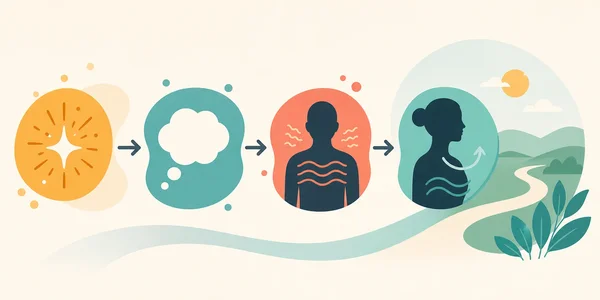
Some people are mean without realizing it because their warning signs are subtle. The reaction may feel automatic: your jaw tightens, your voice gets flat, you interrupt, you make a cutting joke, and only later do you notice the impact. This often happens when anger moves faster than reflection.
Common hidden triggers include:
- Feeling dismissed, corrected, controlled, or embarrassed
- Being hungry, tired, overstimulated, rushed, or in pain
- Expecting rejection before it actually happens
- Carrying resentment that has not been named
- Feeling responsible for everyone while no one seems to notice
- Hearing a neutral comment as criticism because of past experiences
The pattern is not always dramatic. You may become "mean" by becoming cold, impatient, overly logical, or silently contemptuous. You might tell yourself you are just being honest, efficient, or funny. But if people repeatedly seem hurt, guarded, or afraid to bring things up, the behavior deserves attention.
Try this quick pause after a tense moment: What did I think was happening? What did I feel in my body? What did I want the other person to understand? What did I actually communicate? The answers can reveal whether your reaction matched the present moment or came from an older defensive script.
Why Am I So Mean to People I Love?
It can feel confusing to be harsher with the people you love than with strangers. One reason is that close relationships carry higher emotional stakes. You may expect loved ones to read your mood, know your limits, forgive your tone, or understand your stress without needing an explanation. When they do not, disappointment can turn into criticism.
Another reason is safety. Some people hold themselves together in public and release the built-up pressure at home. That does not make the behavior fair, but it explains why your boyfriend, girlfriend, spouse, parent, sibling, or close friend may receive the strongest version of your irritability.
Relationship meanness often follows a loop:
- You feel hurt, ignored, anxious, or overloaded.
- You interpret the other person's behavior as careless or disrespectful.
- You protect yourself with sarcasm, blame, withdrawal, or control.
- They defend themselves or pull away.
- You feel even more unseen, and the loop repeats.
Breaking the loop starts before the apology. Notice your earliest signs: a tight chest, racing thoughts, the urge to "win," or the belief that you must say the harsh thing right now. If you can name the state, you can slow the behavior. "I am too activated to talk kindly, but I do want to come back to this" is often more repairable than pushing through and causing more harm.

Common Reasons You May Be Acting Mean
There is rarely one single reason. More often, mean behavior comes from a stack of pressure points. Use the list below as a reflection map, not a label.
Stress and emotional overload. When your nervous system is stretched, small inconveniences can feel like personal attacks. You may snap because you have no emotional margin left.
Unmet needs. Hunger, sleep debt, loneliness, lack of privacy, too many demands, or too little support can make patience harder. A "mean" tone may be your first clue that a basic need has been ignored.
Resentment. If you keep saying yes when you mean no, anger may leak out as criticism, passive aggression, or sudden distance.
Low self-worth. People who feel inadequate may attack, correct, or dismiss others to feel less exposed. This can also turn inward as harsh self-talk.
Fear of vulnerability. Tender feelings can feel risky. Instead of saying "I miss you" or "I felt rejected," you might say something sharp that hides the softer truth.
Learned communication patterns. If you grew up around yelling, contempt, silent treatment, or emotional unpredictability, those responses may feel normal until you intentionally learn new ones.
Alcohol or substances. Some people become more impulsive, suspicious, or verbally harsh when drinking or using substances. If this is a pattern, it is worth taking seriously.
Mental health or neurodivergence factors. Anxiety, depression, trauma responses, ADHD-related impulsivity, hormonal changes, grief, and chronic pain can all affect irritability for some people. These are explanations to explore, not excuses to harm others. If your reactions feel intense, frequent, or hard to control, consider talking with a qualified professional.
A Pattern Check You Can Use After a Mean Moment
Self-awareness improves when you track real situations instead of judging yourself in vague terms. The anger self-awareness tool is one way to begin noticing frequency, intensity, triggers, and expression style, and you can also use a simple written check-in.
After a tense interaction, write four short lines:
- Trigger: What happened right before my tone changed?
- Story: What did I tell myself it meant?
- Need: What did I need but not say clearly?
- Repair: What would help reduce harm now?
For example, the trigger might be "my partner looked at their phone while I was talking." The story might be "they do not care." The need might be "I wanted full attention because the topic mattered." A repair might sound like, "I snapped earlier. I felt ignored and handled it badly. Can we restart this conversation for ten minutes?"
This exercise is useful because it moves you from global shame to specific responsibility. You are not excusing the behavior. You are finding the chain of events so you can interrupt it sooner next time.

How Can I Stop Being So Mean in the Moment?
The goal is not to become emotionless. The goal is to make the space between feeling and action a little wider.
Use a physical pause. Put both feet on the floor, unclench your jaw, lower your shoulders, and take a slow breath out. A longer exhale can signal that you are not in immediate danger.
Change the sentence, not the truth. You can still be honest without being harsh. Instead of "You never listen," try "I do not feel heard right now." Instead of "What is wrong with you?" try "I am frustrated and need a minute."
Ask for a reset. If you hear yourself getting sharp, say, "That came out badly. Let me try again." Repair is more powerful when it happens quickly.
Delay the message. If you are about to send a cutting text, draft it somewhere else first. Wait ten minutes, then rewrite it as a request, boundary, or feeling.
Name the real emotion. Anger is often easier to show than fear, hurt, shame, or sadness. Try asking, "If I were not allowed to sound angry, what would I admit I feel?"
Set boundaries earlier. Many people become mean after they have already passed their limit. A calm "I cannot take that on tonight" is kinder than saying yes and punishing everyone later.
When Being Mean Points to a Bigger Pattern
It is worth seeking extra support if your anger leads to threats, intimidation, repeated verbal cruelty, property damage, unsafe driving, physical aggression, self-harm urges, or fear in the people around you. It is also worth getting help if you feel constantly irritable, out of control, numb after outbursts, or unable to repair relationships despite wanting to.
Professional support can help you understand emotional regulation, trauma patterns, communication habits, substance use, stress load, or possible mental health factors. If there is immediate risk of harm to you or someone else, contact local emergency services or a crisis support line in your area.
You do not have to wait for a crisis to change the pattern. Support can also be useful when the issue is quieter: repeated sarcasm, contempt, shutdown, harsh parenting moments, or a relationship where both people keep hurting each other without knowing how to stop.

A Kinder Next Step for Understanding Your Anger
If you are asking "why am I so mean," that question already contains a hopeful sign: part of you is watching the pattern and wants another way. Start with one relationship, one trigger, and one replacement response. You might focus on mornings, drinking-related arguments, conflict with your boyfriend or spouse, impatience with your children, or the way you speak to yourself.
For a gentle next step, you can use a free anger reflection tool to explore your anger frequency, intensity, triggers, and expression style. Treat the result as self-reflection, not a final verdict. Then choose one small repair habit: pausing before a text, naming the softer feeling, apologizing without defending, or setting a boundary before resentment builds.
Kindness is not pretending you are fine. It is learning to tell the truth with less damage.
FAQ
What causes a person to be so mean?
Mean behavior can come from stress, resentment, fear, shame, learned communication patterns, unmet needs, pain, substance use, or difficulty regulating emotions. Sometimes it is also connected with mental health or neurodivergence factors. The most useful question is not only "what caused it?" but "what pattern happens right before it?"
Why am I so mean to everyone for no reason?
It may feel like there is no reason because the trigger is small or hidden. Common background factors include sleep debt, chronic stress, overstimulation, unresolved conflict, grief, anxiety, or feeling powerless. Track the time, setting, body sensations, and thoughts that appear before the reaction. Patterns often become clearer after a few entries.
Why am I so mean to my boyfriend or partner?
Close partners often touch your deepest needs for attention, respect, safety, and reassurance. If you feel ignored or rejected, you may protect yourself with criticism, sarcasm, control, or withdrawal. A helpful first step is to replace blame with a specific feeling and request, such as "I felt unimportant when the conversation stopped. Can we try again?"
Why am I so mean to myself?
Harsh self-talk can be anger turned inward. It may come from perfectionism, shame, old criticism, comparison, or fear that being hard on yourself will keep you from failing. Try speaking to yourself in behavior-focused language: "I made a mistake and need a repair plan" instead of "I am terrible."
What does ADHD rage look like?
Some people with ADHD describe fast-rising frustration, impulsive words, difficulty shifting attention, or intense emotional reactions. But anger can have many causes, and ADHD is only one possible factor. If you suspect ADHD or another condition may be involved, a qualified professional can help you evaluate the bigger picture.
How can I stop being so mean?
Start by tracking your triggers, body cues, and repeated stories. Practice pausing before responding, rewriting harsh statements as feelings or requests, repairing quickly, and setting boundaries earlier. If the pattern is frequent, intense, unsafe, or damaging relationships, professional support can make change more structured and less isolating.